

























































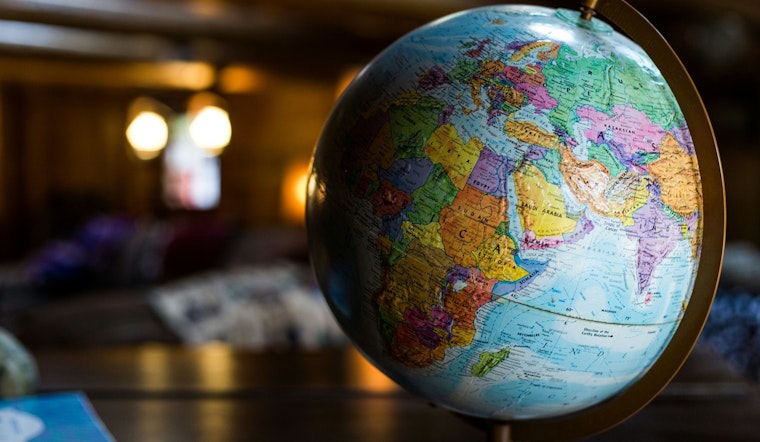
The African Union has thrown its weight behind a stirring campaign dubbed #CorrectTheMap, encouraging a global shift towards accurately portraying Africa's true size on world maps. With over 4,500 signatories backing this initiative, the movement has garnered significant attention and is petitioning for the United Nations and the international community to adopt a map projection that does justice to the continent's dimensions. The conversation about the distortion of Africa's size has long been simmering, but it is only now reaching a boiling point of diplomatic engagement.
For over four and a half centuries, the Mercator projection has reigned supreme in classrooms and boardrooms alike. This map projection, originally crafted for the purpose of aiding colonial explorers and sea traders in their global ventures, has been criticized for its skewed portrayal of landmasses. According to The Conversation, this "flat drawing inflates the size of countries closer to the north or south pole.” Thus, regions such as North America and Eurasia are afforded grandiose representations, while South America and Africa are relegated to sizes far below their actual geographic footprint.
Geography experts like Chancellor’s Professor of Geography Derek Alderman and Assistant Professor of Geography and Sustainability Jack Swab have been vocal about the implications of persisting with the Mercator projection. They argue that using such an inaccurate portrayal reinforces outdated imperialistic perspectives and perpetuates a gross misrepresentation of the world. The movement to #CorrectTheMap isn’t just a quest for geographic accuracy; it’s an endeavor to reshape the pedagogical landscape and dismantle the vestiges of colonialism that linger in educational resources.
In the essence of cartographic fairness, a clearer depiction of Africa's magnitude is not merely a cosmetic change—it is a matter of educational integrity and international awareness. As the African continent pushes for recognition that aligns with its actual scale, the globe may be on the cusp of a map renaissance—one where every land is granted its rightful size and historical biases are smoothed over in favor of a more equitable representation of our shared world.





