

























































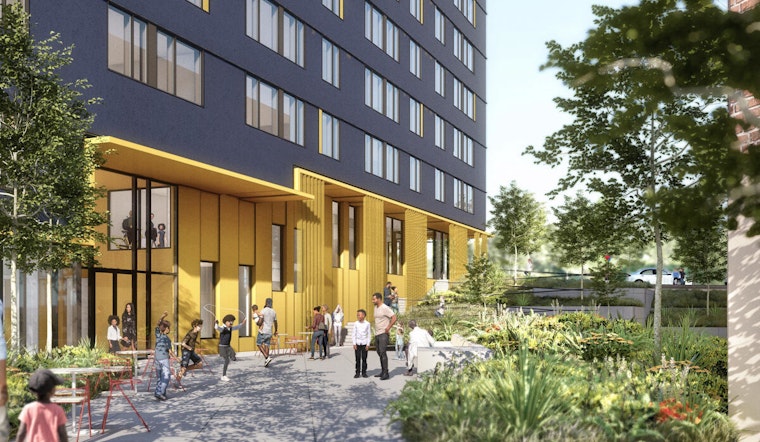
Portland's historic Black neighborhood of Albina is witnessing a symbolic return of its original community with the grand opening of Albina One, a new affordable housing development aimed at bringing back families displaced by urban renewal efforts that spanned decades. According to KATU, the opening ceremony on Saturday marked the end of a 10-year planning process, which was intended to bridge the gap left by the displacement of Black families that occurred in the 1970s.
Sharon Gary-Smith, who maintains both a personal and professional stake in the area as a social justice philanthropist and Albina Vision Trust board member, expressed her bittersweet emotions at the event. "We're sitting less than a thousand feet from my family's home, which is the entrance of building of its schools. So, I have mixed feelings about how incredible this move is," Gary-Smith told KATU.
The building’s inauguration was marked with a block party that celebrated more than just new housing but acknowledged the painful history of eminent domain abuses. "I sat with my parents and understood they are pushing us out, they are taking the land, they are employing eminent domain, which was very racially infused in the days to be able to claim land for the purpose of serving the public — as though we weren’t," Gary-Smith reflected in an interview with KGW.
The damage done in past decades to the Black residents of Albina was evident through the testimony of 73-year-old Lizz Fouther-Branch as she recollected being uprooted in her childhood. The Portland Development Commission's decision to declare eminent domain in the mid-1950s led to the demolition of her family's home for the construction of what is now Legacy Emanuel Medical Center. Her story echoes the losses many in the community faced, which Albina One seeks to atone for through its 94-unit project, giving housing priority to those affected or their descendants.
Albina One’s mission, as well as its execution, is poised to be a small yet significant step in the healing of old wounds inflicted by a city's neglect and discrimination. For the residents returning and those celebrating the neighborhood's resurgence, this move represents a tangible, if not fully restorative, stride toward equity and justice.


