

























































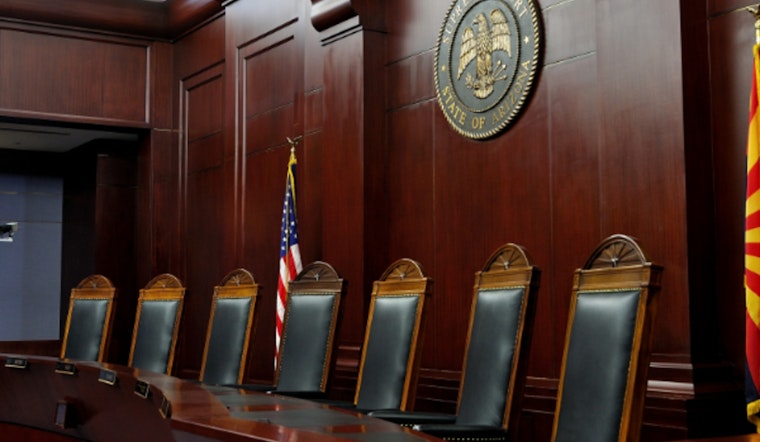
The Arizona Supreme Court has recently ruled on a significant case regarding Proposition 211, the Voters' Right to Know Act. The law, enacted by a voter initiative, mandates that both direct and indirect contributions for campaign media spending be disclosed, and it grants the state's Citizens Clean Elections Commission sweeping powers to enforce these stipulations. The legislative challenge claimed that the Act overstepped, as it seemed to delegate legislative authority to the Commission, something they believed infringed upon the separation of powers as outlined in the Arizona Constitution.
In their decision, the justices recognized that legislative leaders had the standing to sue. They noted that Arizona’s Constitution does not have the same “case or controversy” requirement as the U.S. Constitution in order to have standing to sue, and that the Legislature "may suffer a real injury" if its lawmaking authority is improperly offloaded. Still, the Court stopped short of rendering a verdict on the constitutionality of the proposition, opting instead to send it back to a lower court for further examination. In the meantime, the law continues to stand.
A related case, Center for Arizona Policy v. Fontes, which challenges the Act on other constitutional grounds, was also recently argued before the Court. The decision on this case remains pending. Until a ruling is issued, Proposition 211 remains active and enforceable throughout Arizona. This situation leaves both proponents of the law and its challengers in a state of limbo, awaiting the outcome that will shape the future of campaign transparency in the state.
Justice Clint Bolick penned the opinion of the court, with Vice Chief Justice John R. Lopez IV, Justice James P. Beene, Justice William G. Montgomery, and Justice Kathryn H. King concurring. On the other hand, Chief Justice Ann A. Scott Timmer and Justice Rebecca White Berch (ret.) logged their dissent. The full opinion and a brief explanatory video can be accessed on the Arizona Judicial Branch's website, providing in-depth insights into the Court's reasoning and the implications for Arizona's judicial landscape.





