

























































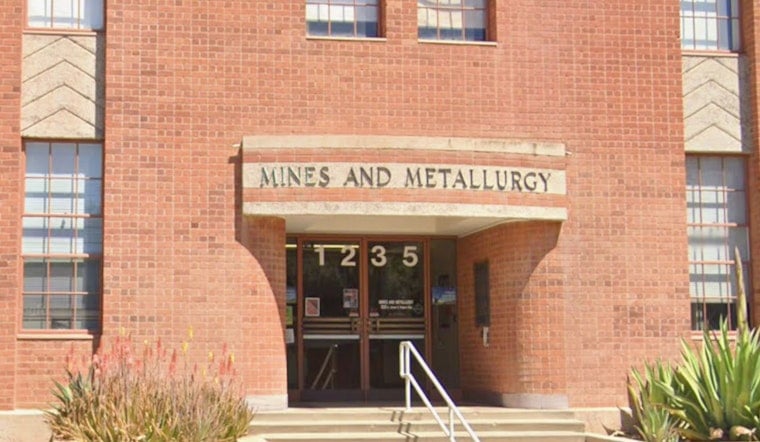
The University of Arizona's School of Mining Engineering and Mineral Resources is positioned to benefit from a new $100 million federal initiative aimed at reversing a steep, years-long decline in the number of Americans training to work in mining. The U.S. Department of Energy unveiled the program, called PROSPECT, on August 7, setting a goal of doubling the number of graduates in mining, minerals, and supply chain fields within two years.
As reported by KVOA, the $100 million investment is aimed at supporting mining education at the University of Arizona. The funding is part of the Department of Energy's Providing Opportunities for Specialized Education in Critical Technologies program, and it specifically targets the nation's 14 accredited mining schools, a group that includes the University of Arizona, according to University of Arizona News.
The PROSPECT program is not standing alone. It was announced as part of a larger $180 million federal grant package unveiled during an August 7 State Department roundtable in Washington, which also directed $80 million from the Department of Defense to the Colorado School of Mines, South Dakota School of Mines, and Johns Hopkins University, per the same university account. University of Arizona representatives made the trip to advocate for the program directly.
U of A Leaders Push Their Case in Washington
Kray Luxbacher, head of the University of Arizona's School of Mining Engineering and Mineral Resources, and Tomás Díaz de la Rubia, the university's senior vice president for research and partnerships, attended the roundtable to make the case for mining education funding, the university reports. Luxbacher commended federal efforts to bolster mining education and accelerate environmental permitting, according to the same account.
The push comes as the industry faces what researchers describe as a demographic crisis. U.S. Department of Energy data from August shows enrollment in university mining programs has declined by roughly 45% since 2015, leaving an estimated deficit of 6,000 new engineers needed in the domestic mining sector over the next decade.
The Society for Mining, Metallurgy & Exploration has compiled even starker figures. Data gathered with the Society of Mining Professors shows enrollment in U.S. mining engineering programs falling from nearly 1,500 students eight years earlier to fewer than 600 by 2023. The organization has also noted that half of the current U.S. mining workforce is nearing retirement, compounding the pipeline problem federal officials are trying to solve.
Copper Investment and Regional Political Backing
U.S. Representative Juan Ciscomani praised the mining education grants alongside a separate, unrelated announcement in August: a $1 billion investment in the Ivanhoe Santa Cruz Copper Project near Casa Grande, according to The Gila Herald. Arizona remains the nation's top copper-producing state, giving the funding added local resonance beyond the university campus.
The University of Arizona's mining program carries institutional weight to match the political attention. In the 2026 QS World University Rankings by Subject for Mineral & Mining Engineering, the program ranked 4th nationally and 19th globally, according to Mining-Technology.com. Colorado School of Mines ranked first globally in the same rankings, while Penn State placed second nationally.
A Unique Underground Lab and Strong Job Placement
The University of Arizona also operates the San Xavier Underground Lab, making it the only accredited mining engineering program in the country with an operational underground laboratory facility, according to the university's Office of Research and Partnerships. The lab allows students and researchers to test mining robotics and safety technology in real underground conditions, a hands-on capability few competing programs can offer.
That training appears to be paying off in the job market. The Gila Herald reports the program boasts a 100% job placement rate for its graduates, who go on to work in industries focused on copper, critical minerals, and sustainable technology. Arizona holds vast copper reserves considered essential for energy and technology manufacturing, giving graduates a built-in local pipeline of employers.
The University of Arizona's mining program has been part of a broader run of research growth at the school; Hoodline previously reported the university topped $1 billion in annual research spending. It also follows earlier federal attention to the field, including a bipartisan bill aimed at revitalizing mining education and workforce recruitment. Whether the new PROSPECT funding will be sustained long enough, and whether universities can recruit new students fast enough, to close the projected 6,000-engineer gap over the next decade remains an open question, according to the Society for Mining, Metallurgy & Exploration and Department of Energy data.





