

























































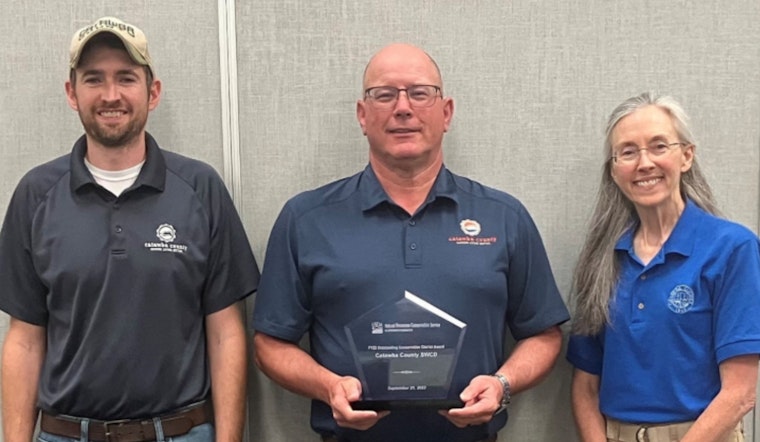
In Catawba County, the mission to safeguard the earth beneath our feet and the water that threads through our landscape remains a cornerstone of the community’s environmental efforts, as evidenced by the work of the Catawba Soil & Water Conservation District. Charged with the protection and improvement of soil and water quality, particularly on agricultural lands, this body stands as a bulwark against the degradation of natural resources essential to both the ecosystem and human survival. A mission, they note, rooted in the “Increase educational awareness of the importance of protecting our soil and water quality,” according to Catawba County.
The operational arm of this mission weaves through a partnership with both state and federal entities, the NC Division of Soil & Water and the USDA Natural Resources Conservation Service respectively. These alliances facilitate voluntary cost-share programs designed to bolster soil and water quality on agricultural properties. Still, their reach extends beyond the furrows of farmland, offering educational programs aimed at a broader audience. In a statement shared by Catawba County's announcement, it’s clarified that although their "programs are focused on the agricultural landowners," services cater to "all citizens of the County". This inclusivity is echoed in their distribution of free soil sample test kits available for any landowner in pursuit of soil quality advancement.
Grounding these ambitious objectives, the district’s base of operations sits on the 3rd floor of the old Catawba Hospital, at 1175 South Brady Avenue. While in governance, a board of five supervisors, a mix of elected and appointed individuals, orchestrate the district's strategies. As for the hands-on work, it falls to a modest cadre of employees—two full-time and one part-time—bolstered by a duo from the NRCS who share the workspace.
The tangible benefits of such programs are myriad and, often, immediate. Local farmers grappling with erosion or water issues may find reprieve by tapping into the district’s resources. “If a farmer is having an erosion/water issue on their farm, they can contact our office and we will come out and see if any of our programs can be of assistance,” the organization conveys, as reported by Catawba County. But the reach of their endeavor stretches even to the minds of the young, as educational programs about improving and protecting soil and water quality are imparted at local schools and libraries.
Not to be overlooked are the distinctive touches the district brings to its educational outreach. An annual environmental awareness day acquaints 5th graders with topics ranging from forestry to the water cycle, in efforts that crescendo into the Envirothon and Resource Conservation Workshop. Programs like these not only serve as a testament to the district’s commitment to ecological education but also to the fostering of a new generation where conservation is not only valued.




