

























































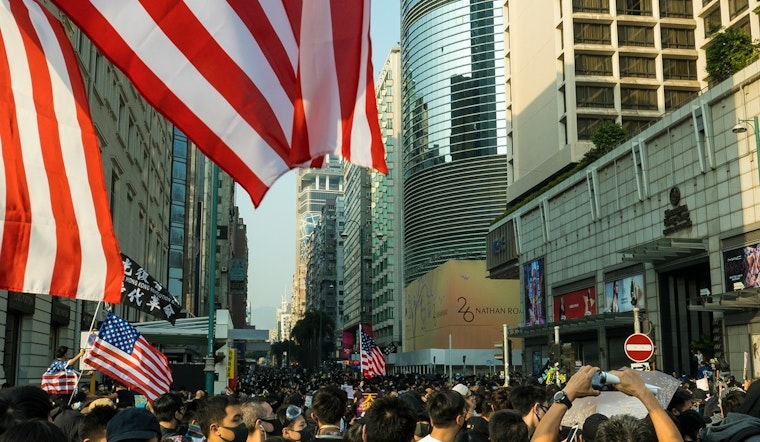
On a day steeped in the history of workers' struggle, Chicago's West Loop became a stage for the contemporary labor movement, as Mayor Brandon Johnson and hundreds of union leaders and advocates united in opposition to President Donald Trump's policies. The rally, which took place at the Haymarket Memorial, had a dual purpose: celebrating labor rights and condemning the president's threats to dispatch federal forces to Chicago, which the mayor vocally opposed.
"No federal troops in the city of Chicago! No militarized force in the city of Chicago! We're gonna defend our democracy in the city of Chicago!" Johnson passionately declared, asserting the city's resistance to the Trump administration's strategies, according to a Chicago Sun-Times report. Johnson's background as a Chicago Teachers Union organizer lent credence to his vocal stand alongside labor advocates during the rally that was also a part of "Workers Over Billionaires: A Labor Day of Action," stretching across the country.
The demonstration's message ranged from defending immigrant rights, embodied in signs like "Immigrants strengthen America," to contesting what participants label as Trump's anti-labor policies; one city building inspector, John Kelleher, insisted on the effectiveness of Chicago's law enforcement by saying, "The police can handle it, Chicago cops are the best," and emphasized the might of labor, as captured by WGN-TV.
Amidst cheers and rallying cries, powerful local figures like CTU President Stacy Davis Gates made clear where they stood, Gates herself articulating, "Solidarity is the antidote to white supremacy," and weaving a narrative of unity against various societal ills, these statements reflect the participants' conviction, with the anchoring quotes provided by the Chicago Sun-Times. The educational sector was also represented by Randi Weingarten, President of the American Federation of Teachers, advocating for sufficient wages and the well-being of workers as reported by WGN-TV, her statement, "We must demand a better life for all workers, One job should be enough," echoing through the murmurs of the crowd.
Johnson's presence and words tied the local to the national conversation about labor rights, immigration, and the current administration's policy directions, with the Labor Day rally spotlighting the city's deep-rooted allegiance to workers and suggesting Chicago's intent to remain a bulwark for labor in the face of opposing winds from the White House.





