

























































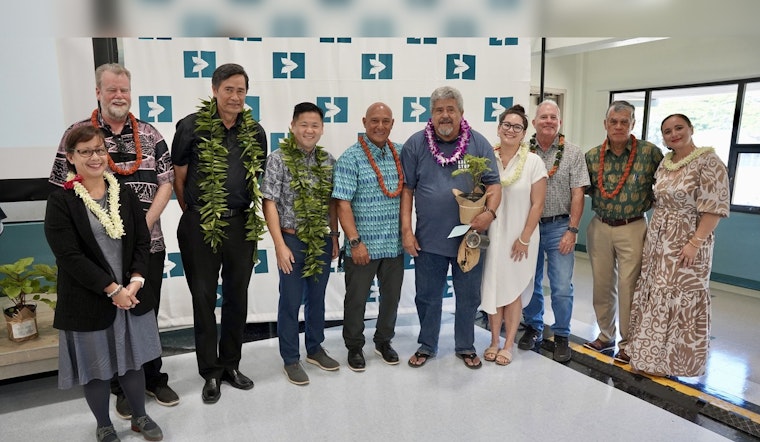
The Department of Hawaiian Home Lands (DHHL) recently announced the awarding of 105 agricultural project leases across Maui, marking a significant development for indigenous Hawaiian communities—with 55 leases at the Waiehu Mauka subdivision and another 50 at the Honokōwai subdivision.
This move represents the first batch of agricultural lease awards by the DHHL since the early 2000s. Governor Josh Green highlighted the event's importance for building stronger communities by allowing Native Hawaiian families to grow their own food and reduce dependence on imports. This ambitious initiative hasn't been seen in over two decades, making the event itself a landmark in the department's history. "Ag leases represent a fantastic opportunity for our Native Hawaiian families to grow fresh foods for their 'ohana, while lowering costs and reducing reliance on imported goods," Green stated in a press release.
The subdivisions of Waiehu Mauka and Honokōwai, covering 240 and 45 acres respectively, are envisioned to provide residents with substantial lots ranging from half to two acres each. Kali Watson, DHHL Director, emphasized the leases as a path to actualize Prince Jonah Kūhiō Kalaniana‘ole's vision to rehabilitate Native Hawaiians by marrying agricultural opportunities with the potential for establishing homes—a combination that fosters not just sustenance but also cultural reclamation.
Backing the projects is Act 279, a legislative move from 2022 that injected $600 million into the DHHL for the purpose of acquiring lands and implementing necessary infrastructural support. Senator Troy Hashimoto reinforced the stance on the importance of progress, expressing a pointed urgency to evolve the paper leases into viable land leases with the necessary amenities in place. Despite the funding, "We need to focus on the mission of making sure the paper leases awarded become actual land leases, and "We need to get the land ready to move in, the $600 million is not enough," he told the DHHL.
Construction timelines aim for occupants in Waiehu Mauka to settle in by 2030, with the development completed by 2033, while Honokōwai's project kicks off in 2029, expecting to wrap up two years later. The department's unique approach allows leaseholders to have an undivided interest in a land parcel and the freedom to transfer these leases to a qualified successor who meets a 25-percent Hawaiian blood quantum requirement.
Looking ahead, the DHHL is prepping for a robust lease award lineup next year, targeting areas like Pūlehunui, Honokōwai, and Hāna—aiming to parcel out over 230 leases in an ongoing effort to reduce waitlists and promote homeownership. A pilina-based priority waitlist for Hāna will debut alongside these efforts, giving priority based on applicants' current or former residency, lineal descent, or family ties within the area, as to maintain the fabric of the community.
Maui Mayor Richard Bissen acknowledged the positive trajectory of these developments, pointing out the broader community impact as residents transition off Hawaiian Homes' lists and thereby freeing up slots on other housing lists. "We have a commitment to DHHL – we want to be good partners, I think we already are," Bissen commented on the efforts to expedite the homesteading process, as mentioned in the same press release.





