

























































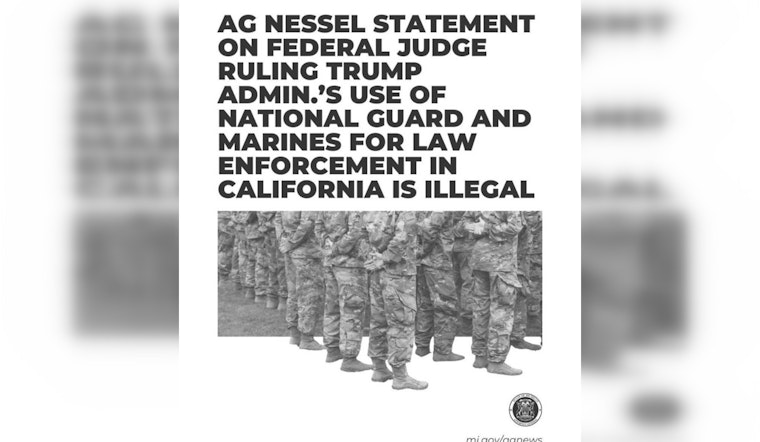
A federal judge has ruled that the Trump Administration’s use of California National Guard members and Marine Corps troops for law enforcement duties in Los Angeles was unlawful. According to a statement from the Michigan Attorney General's Office, the decision highlights ongoing legal questions regarding the balance between federal authority and state sovereignty. “The President’s effort to deploy active-duty troops against Americans to conduct everyday law enforcement is an affront to the rule of law,” Nessel said, reiterating her position that such actions conflict with the foundational principles of state governance and civil liberties.
In reviewing the court's opinion, U.S. District Judge Charles Breyer concluded that the Trump Administration exceeded legal limits in its use of military personnel in Los Angeles. The court found that federal authorities deployed armed soldiers with their identities often concealed by protective gear, along with military vehicles, to establish perimeters, control traffic, and manage crowds. These actions were determined to violate the Posse Comitatus Act, which generally prohibits the use of federal military forces for domestic law enforcement. The ruling imposes immediate restrictions on federal military involvement in California, unless overturned on appeal.
A key element of the ruling, outlined in Attorney General Nessel’s statement, includes an immediate prohibition on military involvement in law enforcement activities such as arrests, searches, and crowd control. These restrictions are scheduled to take effect on September 12, unless the federal government successfully appeals the decision. The court’s position reinforces the separation of military and civilian roles, addressing concerns about the use of armed forces in routine policing within Los Angeles communities and the implications for civil liberties.
The impact of this decision is expected to extend beyond California, potentially shaping future interpretations of the relationship between federal authority, military involvement, and local governance. However, it remains uncertain whether the current administration will challenge the ruling, given its broader implications and the ongoing political divisions across the country. For now, state officials and civil liberties advocates may view the decision as a temporary affirmation of legal limits on executive power and a recognition of the importance of preserving local control over law enforcement practices.



