

























































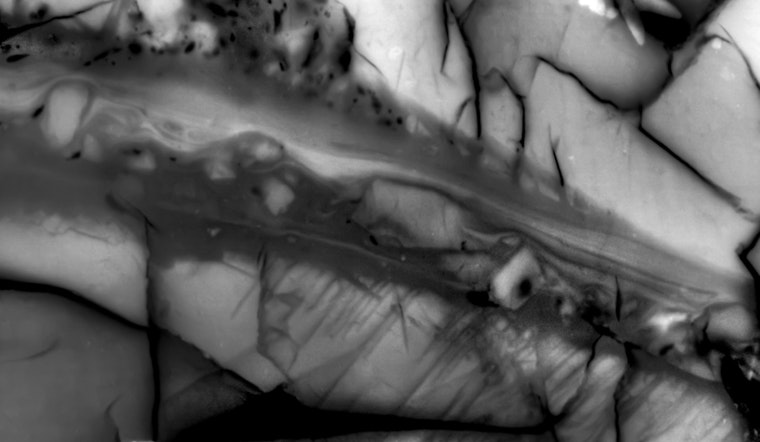
In a ground-shaking revelation, MIT geologists have made significant headway in understanding the energy distribution during earthquakes. Through meticulous experiments involving "lab quakes," small-scale simulations of natural earthquakes, the research team was able to trace where the energy goes when the earth trembles. In findings that could eventually shape our assessment of seismic risks, they conclude that a substantial 80 percent of quake energy is converted into heat, a stark contrast to the mere 10 percent causing physical ground shaking and less than 1 percent resulting in rock fracturing.
As earthquakes strike with little warning, teasing out the details of their energy flow is crucial to predicting future risks in seismically active areas. The MIT team's strategy opens a window into the mechanics of earthquakes, which have traditionally eluded in-depth study due to their unpredictable nature and inaccessible subterranean origins. According to a publication on MIT's official news site, the team employed a specially designed apparatus to simulate earthquakes at a microscale, which, despite being on a much smaller scale, accurately mirror the energy dynamics of larger seismic events.
Lead researchers Matěj Peč and Daniel Ortega-Arroyo at MIT, along with their colleagues from Harvard University and Utrecht University, fine-tuned this process to comprehend the enigmatic dispersal of energy. Their rigorous scientific inquiry, supported in part by the National Science Foundation, took advantage of rock samples and magnetic particles to gauge temperature spikes indicative of heat generated during the seismic simulations. Piezoelectric sensors, another arm of their investigative arsenal, measured the physical shaking, providing a clear breakdown of energy expenditure. This collaborative effort was detailed in the journal AGU Advances on August 28.
The implications of this research stretch far beyond academic curiosity. With knowledge that a region’s geological past can impact how earthquake energies are divided, the study hints that areas with a complex deformation history may respond differently to seismic stress. "The deformation history — essentially what the rock remembers — really influences how destructive an earthquake could be," Ortega-Arroyo indicated, as reported by MIT news. This discovery underscores the role of preexisting geological conditions in shaping quake impact.
In practical terms, understanding the partition of earthquake energies can help seismologists more effectively gauge the threats posed by potential quakes. Peč notes, "Our experiments offer an integrated approach that provides one of the most complete views of the physics of earthquake-like ruptures in rocks to date." The team's research not only enlightens our grasp on the forces at work beneath our feet but also promotes strides toward enhanced seismic risk mitigation and model refinement. For earthquake-prone regions, these findings might soon illuminate the once-dark secrets lying beneath the surface. The results, detailing the fine dance of pressure and slip within the Earth's crust, have sparked a new flame of knowledge in the enigmatic realm of earthquake science.




