

























































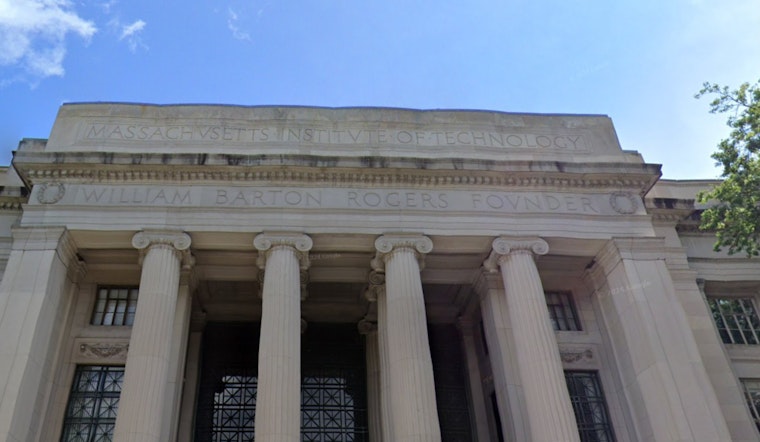
MIT has stepped up its game in the astronomy world by joining the consortium that's building the mammoth $2.6 billion Giant Magellan Telescope in Chile, an observatory that promises to reshape our grasp of the cosmos. Enabled by a significant donation from Phillip (Terry) Ragon '72 and his spouse Susan, the prestigious institution is bringing its scientific calibre to a collaborative that already touts substantial investments across the U.S. With construction already underway, MIT's inclusion is expected to amplify the capabilities and potential of this high-stakes astronomical venture, as reported by MIT News.
Detailing the generosity of the Ragons, MIT President Sally Kornbluth highlighted their knack for pivotal scientific interventions. "We saw this with their founding of the Ragon Institute, which pursues daring approaches to harnessing the immune system to prevent and cure human diseases. With today’s landmark gift, the Ragons enable an equally lofty mission to better understand the universe — and we could not be more grateful for their visionary support," MIT News quoted Kornbluth expressing gratitude. However overwhelmed with the prospect of burgeoning capabilities, MIT's commitment is a strategic one, designed to maintain U.S. leadership in a field where international competition is fierce and the stakes, quite literally, astronomical.
The Giant Magellan Telescope, now with MIT's backing, represents a power play in the realm of astronomy, effectively slated to have up to 200 times the power of existing observatories. The joining of MIT into the fold as the 16th consortium member positions it among titans of academia and research institutions. "With MIT, we are not just adding a partner; we are accelerating a shared vision for the future and reinforcing the United States’ position at the forefront of science," affirmed Robert Shelton, president of the Giant Magellan Telescope in remarks obtained by MIT News.
The MIT Kavli Institute for Astrophysics and Space Research brings decades of astronomical excellence to the table—a legacy that will inevitably bolster the capabilities of the Giant Magellan Telescope. Alongside high-resolution spectroscopy and adaptive optics, a strong focus for MIT's team will be the relentless pursuit of the search for extraterrestrial life. Robert A. Simcoe, director of the MIT Kavli Institute, told MIT News about the historical progression of telescopes, noting the significant scientific revelations that each epoch's leading instruments have introduced. While the world watches the telescope's pieces being assembled across 36 states, the contribution of MIT is not only a nod to advancing scientific frontiers but also an assertion of the U.S.'s intention to secure a firm anchor in the ongoing narrative of space exploration.
As MIT researchers get ready to harness the telescope’s capabilities, the institute boasts a resume of more than 150 individual science programs in the last three years engaging in deep-space expeditions and cosmic wonderment, according to MIT News. With an arsenal of research in areas like exoplanets, cosmology, and extreme gravity, access to the Giant Magellan Telescope ensures that the MIT community—and by extension, U.S. science—remains at the cutting edge of astrophysical discovery.



