

























































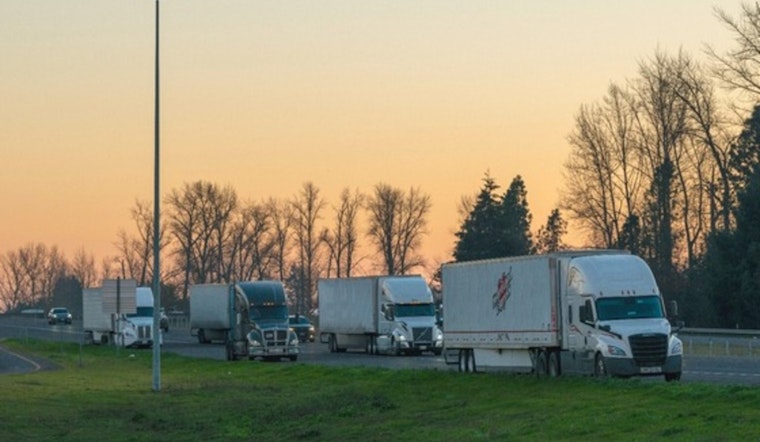
Oregon's commercial driving landscape is gearing up for some changes, as the state's Department of Motor Vehicles (DMV) has announced revisions to the Commercial Driver's License (CDL) testing materials, set to take effect on October 1. The updated materials, aimed at ensuring drivers are equipped with the knowledge and skills to safely operate commercial vehicles, are revisited in accordance with the latest standards and technologies. This revamp includes a new Commercial Driver Manual and the introduction of updated knowledge test questions and skills test components, encompassing vehicle inspection checklists and Basic Control Skills maneuvers.
The new materials are tailored to boost a driver's ability to spot potential mechanical issues and verify that the vehicle is secure for operation, embodying elements of CDL vehicle inspection and Basic Control Skills maneuvers such as backing, turning, stopping, these updates hold not just the promise of greater road safety but also greater harmony with national standards as they bring Oregon in step with the American Association of Motor Vehicle Administrators' (AAMVA) modernized testing protocols, this non-profit organization, which provides a framework for motor vehicle administration and highway safety across the United States, is now a touchstone for Oregon's approach, granting DMV access to AAMVA's extensive training resources and compliance assistance.
In a statement obtained by Oregon Department of Transportation, the DMV clarified that both current and updated tests can be used by DMV and third-party examiners until June 1, 2026. Nevertheless, drivers holding scores from the existing test format may face constraints in finding examiners willing to administer the old test as the transition picks up pace. The shift underscores Oregon's adherence to the Commercial Motor Vehicle Safety Act, which mandates uniform commercial driver licensing standards across all states, ensuring consistency in the qualifications of those operating heavy-weight vehicles, buses carrying 16 or more passengers, and vehicles transporting hazardous materials or regulated toxins.
The DMV's updates are more than mere administrative tweaks; they are a linchpin in a broader scheme that aspires to optimize road safety and driver proficiency in the face of evolving technology and regulatory landscapes, ensuring that Oregon's CDL holders can navigate not only the byways of the Beaver State but also the complexities of contemporary transport with a level of assurance that speaks to the foresight of their training.



