

























































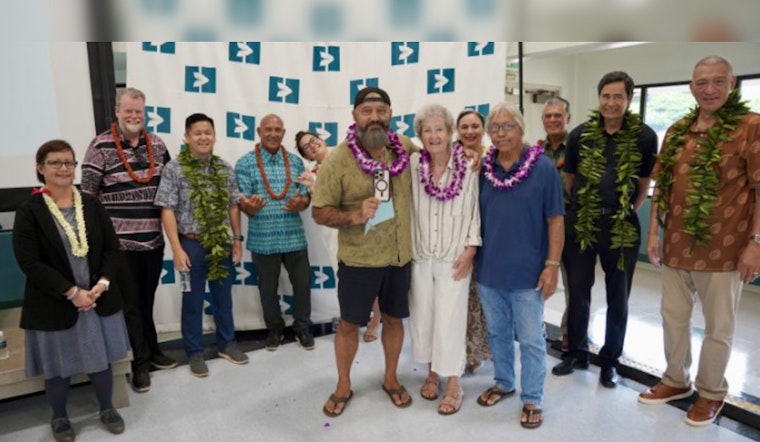
The Department of Hawaiian Home Lands (DHHL) recently awarded more than 100 agricultural project leases on Maui, marking a substantial move in providing land opportunities for Native Hawaiian families. According to DHHL, the leases—105 in total—were divided between two subdivisions, with 55 leases for Waiehu Mauka and 50 for Honokōwai; this event is a first since the early 2000s and comes as a significant stride in the department’s broader goals.
Governor Josh Green highlighted the significance of the leases in promoting self-sufficiency among Native Hawaiian communities: “Ag leases represent a fantastic opportunity for our Native Hawaiian families to grow fresh foods for their ‘ohana, while lowering costs and reducing reliance on imported goods,” he told DHHL. Each subdivision offers different lot sizes—Waiehu Mauka includes half-acre lots over approximately 240 acres, and Honokōwai offers one- to two-acre lots across around 45 acres. The disparities in lot sizes reflect the unique attributes and intentions for each community space, with the larger Honokōwai spaces allowing for more extensive agricultural activity. DHHL Director Kali Watson emphasized that the leases align with Prince Jonah Kūhiō Kalaniana‘ole’s vision for the rehabilitation of Native Hawaiians, expressing that “this model not only provides our beneficiaries with the land base to construct homes but also offers them a chance to cultivate a dependable food source.”
Senator Troy Hashimoto contributed his stance on ensuring proper infrastructure support for these developments, shedding light on the challenges ahead. "We need to focus on the mission of making sure the paper leases awarded become actual land leases," he stated, as noted by DHHL. "We need to get the land ready to move in, the $600 million is not enough." The funding of these projects derives from Act 279, an allocation by the legislature that significantly bolsters DHHL’s capacity to implement necessary utilities for homesteading.
Scheduled construction timelines anticipate a start in 2027 for Waiehu Mauka, with an expected occupancy date by 2030 and completion anticipated by 2033. Meanwhile, Honokōwai’s work will begin in 2029 and is slated for completion two years later. The granting of leases prior to development affords beneficiaries an undivided interest in parcels and the chance to pass these leases on to qualified successors. This new approach by the department represents an effort to diminish waitlist numbers while fostering community and ownership continuity. Mayor Richard Bissen voiced his support for the programs, underscoring the cascading community benefits when Hawaiian Homes beneficiaries obtain leases: “We have a commitment to DHHL—we want to be good partners, I think we already are,” Bissen explained, as reported by DHHL. “We understand the significance of housing. One of the important things people need to know is that when we can get people off the Hawaiian Homes’ list, they also come off all the other lists they were waiting on. A lot of families are on two lists – on a public list or private list, as well as Hawaiian Homes. We help the whole community when Hawaiian Homes folks come off these lists, there are many more spaces for the rest of the community.”
Looking ahead, DHHL has plans in motion to award more than 230 project leases next year for subdivisions such as Pūlehunui, Honokōwai, and Hāna, with a new pilina-based priority waitlist set to aid development of homestead communities in rural areas based on current and former residency, lineal descent, or relatives' residency. These future developments remain integral to DHHL’s strategy of not just parceling out land, they play a crucial role in preserving cultural heritage and supporting collective well-being through shared values and traditions.





