

























































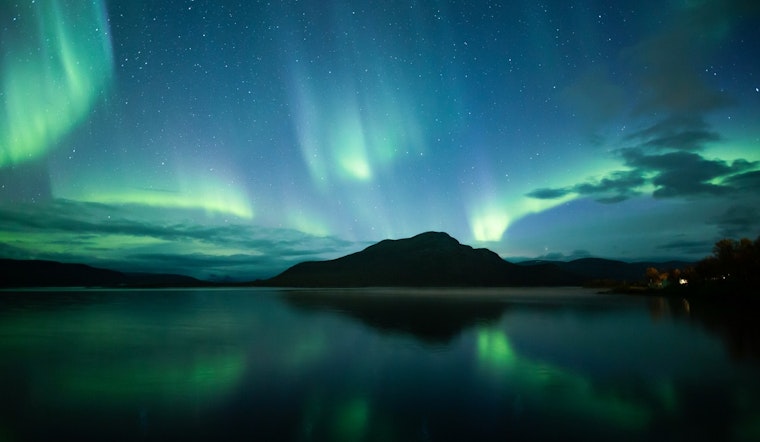
Breathtaking natural phenomena are, on occasion, not relegated solely to the high latitudes. CBS Boston reports that a chance to witness the northern lights, or aurora borealis, is on the horizon for Massachusetts residents this night. The occurrence, it is tied to a substantial solar storm expected to collide with Earth's magnetic field late today into tomorrow, may generate a geomagnetic disturbance strong enough to propel the auroras much further south than is typical.
The National Oceanic and Atmospheric Administration's Space Weather Prediction Center detailed that a "cannibal" coronal mass ejection is behind the event – a situation where one burst of solar particles overtakes another, creating the potential for more significant impact. Despite the potential spectacle, cloud cover might obscure the view, particularly in the eastern parts of the state. More favorable conditions with clearer skies are predicted in western and northern areas, where lower light pollution exists, the denser cloud cover could mean, missing out for other locales.
The visibility line for the auroras is expected to dip down into parts of the Midwest and Northeast, which, notably includes Massachusetts. MassLive echoed predictions that the northern lights would be visible across a good portion of New England this night. The solar material, that began its journey towards our planet on Saturday at speeds potentially reaching 2 million mph, has intrigued scientists and sky-watchers alike.
While the chance to gaze upon the northern lights within the New England area is a rare event, the NOAA Space Weather Prediction Center also notes that the event may cause "limited minor effects to some technological infrastructure," according to MassLive. They have reassured that any such effects are often minor and can be mitigated. For optimal viewing of the auroras, one should seek spots away from urban lights and look north following the hours after dark, peaking around midnight. The best-time window for this natural light show extends through those early morning hours tomorrow.
NOAA's storm watch, which runs through tomorrow, indicates that there may be additional opportunities to catch the auroral display as the skies clear. For those intent on basking in the glow of the elusive northern lights, patience, and a bit of luck with the weather may well grant a mesmerizing skyward experience.




