

























































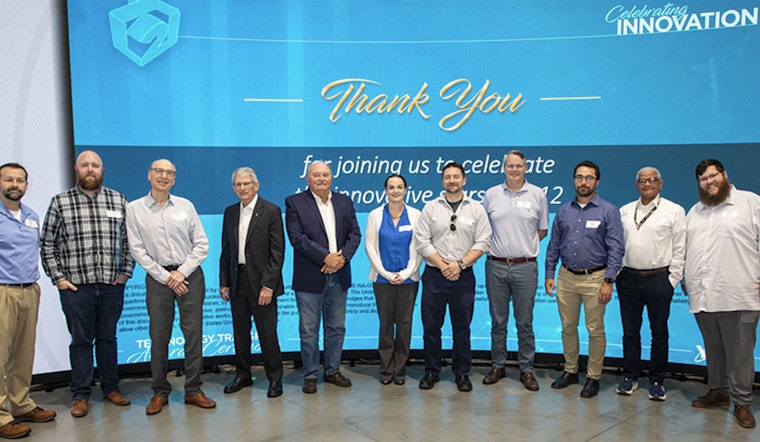
The Y-12 National Security Complex has marked a period of notable achievements in the realm of technological innovation and sharing, according to the Department of Energy's recent announcement. Over the past four years, the facility's Partnerships and Technology Transfer Program has been instrumental in bridging the gap between high-grade security developments and the commercial sector, facilitating a collaborative environment that nurtures scientific progress and the practical application of novel ideas.
Grant Allard, the lead of the tech transfer program at Y-12, highlighted the dual impact of their work, stating, "The work of Y‑12’s scientists, engineers, and inventors has not only advanced our national security mission but has also pushed the boundaries of innovation." With these efforts, Y-12 has issued 20 patents, disclosed 33 inventions, and entered into numerous agreements to leverage its technology, including three cooperative research and development deals, 108 nondisclosure accords, and nine memoranda of understanding in just the last few years alone.
Daniel Riddick, the manager of the facility’s Technology Transfer program, emphasized the translational nature of their labor: "At its core, tech transfer is about creating bridges and taking the innovations developed at Y‑12 and connecting them to the outside world." Riddick elaborated that through these connections, Y-12 inventions transition into broader innovations, a fact underscored by the more than $203,000 in royalty revenue generated from licensing these patents.
The span of Y-12's patented technologies is wide-reaching, ranging from machinery that efficiently forms finished parts on a lathe to detectors designed to identify chemical, radiation, and neutron activity. Among their inventions is a notable low-temperature lithium production patent and a cutting tool intended to reduce material waste. Moreover, Y-12 has celebrated two of its own for designing a versatile ink lubricant barrier, which has been adopted by Lawrence Livermore National Laboratory and is currently in advanced testing at Idaho National Laboratory. This ingenuity was recognized with a Government Use Award—it exemplifies how hinterland inventions can galvanize progress throughout the entire Nuclear Security Enterprise.
Meanwhile, entrepreneurial zeal within the complex has spurred further advancement. An employee took leave to foster the commercialization of a technology for beryllium detection wipes, leading to a successful licensing agreement and a 3% profit return to Y-12. This venture marked the first royalty deal of its kind at the facility in 30 years. "Through her leadership, Y‑12 made the first royalty deal in 30 years, returning 3% of the profits to the site to invest in people and awards," celebrated senior director of Development, Randy Dziendziel.
Allard summed up the accomplishments, crediting a distinct Y-12 ethos: "Every award represents the very best of Y‑12’s spirit — our drive to solve complex challenges, our commitment to national security, and our belief in the power of science and engineering to make a difference." The collective feats of Y-12 not only represent the institution's commitment to advancing national security but also underscore its dedication to fostering innovation and cultivating a safer, more secure world.





