

























































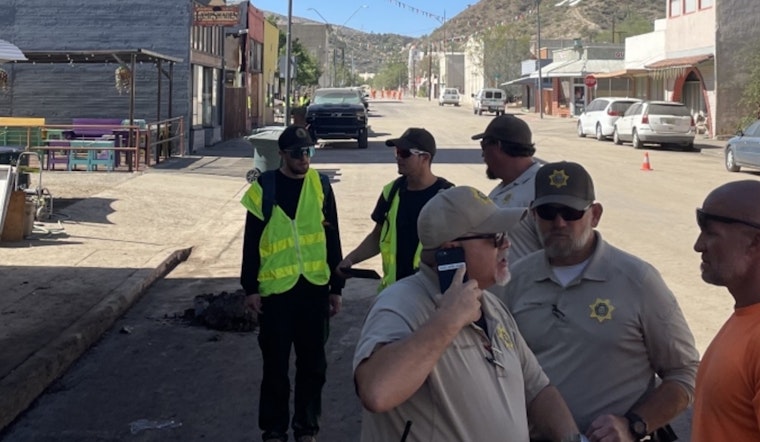
In a heartening display of unity, staff and incarcerated individuals from ASPC-Safford were recently mobilized to aid the flood-stricken community of Miami, Arizona. According to an announcement from the Arizona Department of Corrections, Rehabilitation & Reentry (ADCRR), these volunteers joined forces to support local residents by removing debris, unblocking roads, and providing general assistance amidst the chaos inflicted by severe flooding. The clean-up efforts exemplify how individuals from various walks of life can come together to foster community resilience in the face of natural disasters.
The collaboration between ADCRR staff and inmates has not only proved instrumental in hastening Miami's rehabilitation process, but it also reflects a broader commitment to community service and teamwork, ideals that carry weight far outside the confines of prison institutions; amidst the clearing of wreckage and mud-soaked furniture, the volunteers were seen working side by side, their actions sending ripples through the collective effort to restore normalcy to the beleaguered town. As reported by Arizona Department of Corrections, Rehabilitation & Reentry, this initiative is part of a greater push towards constructive engagement between the incarcerated and greater society, promoting a cooperative spirit.
Noteworthy in this effort is the breaking down of barriers often felt between those within the penal system and the public at large; this physical labor side-by-side manifests a tangible relation, fostering a narrative not often highlighted in the mainstream conversation about incarceration. It becomes a moment where the humanity of those imprisoned can be seen through the lens of contribution and altruism rather than through the singular narrative of their transgressions.
As the town of Miami continues to recover from the flooding, such acts of service and unity serve as testament to the potential for restorative justice practices and, the rehabilitation that extends outside prison walls, simultaneously it offers a glimpse into the positive outcomes that emerge when society at large recognizes the value and capacity of all its members, including those who are often marginalized by their past. The ADCRR's commitment to such initiatives not only aids in the immediate recovery efforts but also in paving a way for a dialogue about the role of correctional facilities and their inhabitants in the broader community.





