

























































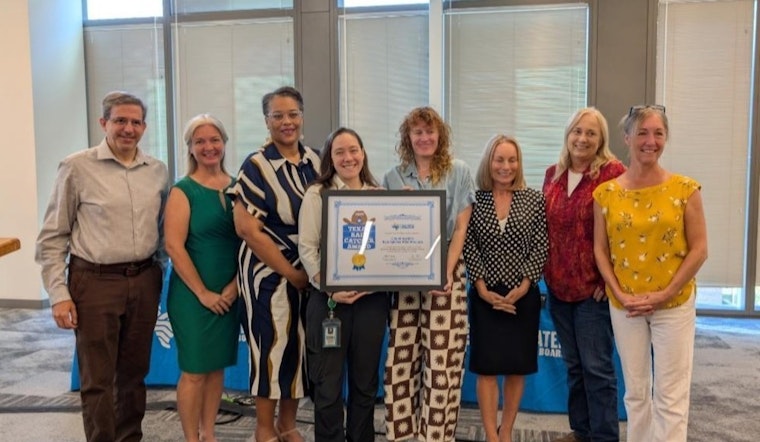
Austin Watershed Protection has nabbed the 2025 Texas Rain Catcher Award for its Rain Catcher Pilot Program, a nod to the city's innovative approach to managing stormwater runoff. The Texas Water Development Board presented the award in the governmental category on Oct. 2, an acknowledgment of Austin's commitment to green infrastructure and environmental stewardship. This pilot program, which concluded in January 2025, was pivotal in equipping over 40 North Central Austin residential properties with a range of water-saving installations.
According to the City of Austin news release, the program saw the installation of 117 large cisterns, 65 rain gardens, and 124 rainwater irrigated street trees, capable of capturing up to 185,000 gallons of rainwater per storm. This array of green infrastructure helps mitigate common urban issues such as erosion and ponding while supporting creek baseflow in an area that spans a 1.08-square-mile area in the Waller Creek Watershed, a region developed before the implementation of Austin's watershed protection regulations.
"The Rain Catcher Pilot Program shows how small-scale, community-based solutions make an impact," Jessica Wilson, Watershed Protection Manager, remarked in a statement, according to the City of Austin. These community-focused efforts were aimed at transforming an often overlooked urban challenge into a collective opportunity for growth, resilience, and communal betterment.
"By working across City departments, partnering with a nonprofit and researchers, and engaging our community, we were able to turn rainwater from a problem into a resource to improve creek health, conserve water, cool our city, and build stronger neighborhoods along the way," Environmental Officer Liz Johnston told Austin Texas Gov. Liz Johnston highlighted the program's success in deepening the community's insight into the vital role individual actions play in shaping a city that is simultaneously habitable and hard-wearing against the whims of climate.
Among its myriad benefits, the Rain Catcher Pilot Program also played a part in water conservation, purveying alternative water sources during outages, increasing tree canopy density, bolstering wildlife habitats, and fostering neighborhood connections. Its execution was a concerted effort that involved collaboration between Austin Watershed Protection, Urban Patchwork, other community partners, as well as support and funding from Austin Water and Austin Development Services to help residents add green infrastructure to their properties at lower costs.




