

























































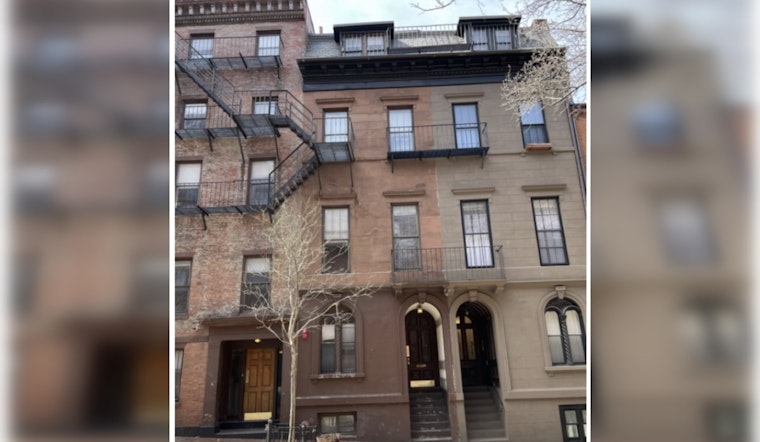
Beacon Hill, a historic Boston neighborhood, is traditionally known for its charming streets and affluent residents. However, some changes are afoot, aiming to add a touch of modern equity to the area's storied past. Two properties on Hancock Street are slated to be converted into affordable housing units, a move that has been endorsed by the Beacon Hill Architectural Commission. As reported by Boston.gov, the Commission approved the planned rehabilitation of 27 and 29 Hancock Street, greenlighting the development of 15 affordable housing units by the Fenway Community Development Corporation (FCDC).
The new housing project is part of the community benefit agreements stemming from the redevelopment of The Archer Residences at 33–61 Temple Street. This location was formerly Suffolk University Law School, which was converted to condominiums in 2021. But now, the buildings at 27 and 29 Hancock Street are to reflect today's pressing need for affordable living spaces in central Boston locations. "Beacon Hill has long proven that preservation and affordability can go hand in hand," Colin Zick, President of the Beacon Hill Civic Association, told Boston.gov. He believes that "the rehabilitation of 27 and 29 Hancock Street—creating 15 new affordable homes through the Archer Residences community benefits—is exactly the kind of partnership our neighborhood has historically embraced."
Historically, Beacon Hill's North Slope was home to various working-class families, artists, immigrants, and lower-income residents, mirroring the city's eclectic population. The push for more affordable housing in this district carries forward a tradition dating back at least to the 1970s, when the former Bowdoin School was converted into subsidized housing for seniors. The conversion of the Beacon House and Anderson Park apartments followed suit, integrating affordable living spaces into the historic fabric of the community.
The initiative is seen not only as a means to provide essential housing but also as an exercise in historic preservation. A strategy that goes back decades, adapting historic buildings for modern use retains community character and prevents the displacement of existing residents. Mark Kiefer, chair of the Beacon Hill Architectural Commission, asserts, "Adaptive reuse is an essential pillar of historic preservation." He continued to explain to Boston.gov that "the sensitive restoration now being undertaken by FCDC will further Beacon Hill’s legacy of supporting affordable housing that meets the very highest standards."
The targeted properties for redevelopment come with their own tales. 27 Hancock Street was an Italianate townhouse built in the 1860s, while 29 Hancock Street, originally a Federal-style townhouse, was altered in the late 19th century to become a tenement building. These planned restorations aim to honor the architectural history while updating the structures' purpose to serve the needs of the contemporary city. And as FCDC prepares to write the next chapter in Beacon Hill's ongoing story, both the past and the future seem to find common ground on the streets of this iconic Boston neighborhood.





