

























































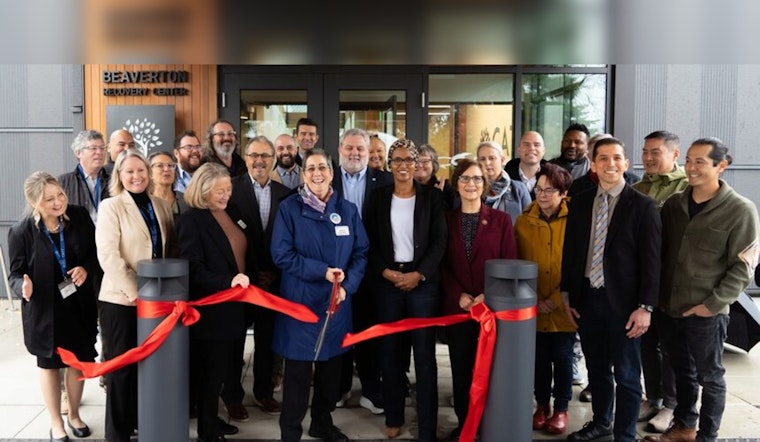
Washington County has stepped up its game in the fight against addiction with the opening of the new Beaverton Recovery Center (BRC). As reported by the county's Health and Human Services website, this facility, which started welcoming individuals earlier today, brings an additional 86 treatment beds and a suite of related addiction services to the region.
Local officials, including Washington County Board Chair Kathryn Harrington, marked the occasion with a ribbon-cutting ceremony that signals a notable shift in the county's capabilities to address substance use issues. "Until now, the county has lacked critical capacity for substance use treatment services with no sobering beds, few residential beds, and no publicly funded detox beds," Harrington stated, according to the county's Health and Human Services website. These gaps in service have been a lingering issue that has finally met a resolution with the BRC's launch.
At the heart of this new facility is a vision shaped by the very individuals it seeks to serve. The BRC's design and programming have been honed by the contributions of more than 250 community members, ensuring its relevance and efficacy. People with lived experience related to substance use were integral to the project—consulted at nearly every turn, which speaks volumes about the center's approach to recovery as a collaborative and inclusive journey.
A well-established addictions provider, CODA, Inc., has been designated to operate the services at the BRC. Alison Noice, executive director of CODA, told the county's Health and Human Services site, "This innovative program will impact thousands of individuals and families each year and should be a source of great pride for the Washington County community." CODA's holistic approach promises a more targeted, user-informed pathway to recovery, with services spanning from short-term sobering care to residential treatment options.
The array of amenities offered at BRC is robust. With 48 residential treatment beds that offer a structured environment for individuals to learn relapse prevention skills over a 30-90 day period. Sobering beds, to become available in 2026, are set up to support individuals in acute intoxication stages, and plans for 16 detox beds are in place to assist with withdrawal management. Furthermore, six transitional service beds will aid in bridging the gap as clients move out of residential care.
Open to adults aged 18 and older, BRC services are voluntary and can be accessed both through provider referrals and direct self-request from individuals seeking support, as outlined on the official county website. The BRC, situated at 17911 NW Evergreen Place, is scheduled for full operation starting November 17.
It's also noteworthy that the CATT program encompasses another site, the Hillsboro Recovery Center, which started operations earlier this year. The Hillsboro Recovery Center, located at 5250 NE Elam Young Parkway, extends outpatient services through various partners, as per county information.
Funding for these centers was amassed through an intricate mix of health care grants, opioid settlement dollars, and other funds, totaling approximately $62.3 million. As stated by Washington County Behavioral Health's project manager, Kristin Burke, on their website, the CATT is tailor-made "by our community, for our community," and is anticipated to substantially impact the lives of those embroiled in the challenges of addiction in Washington County.
For more details about the services and access points for the CATT program, interested individuals can explore further at wcor.us/catt.





