

























































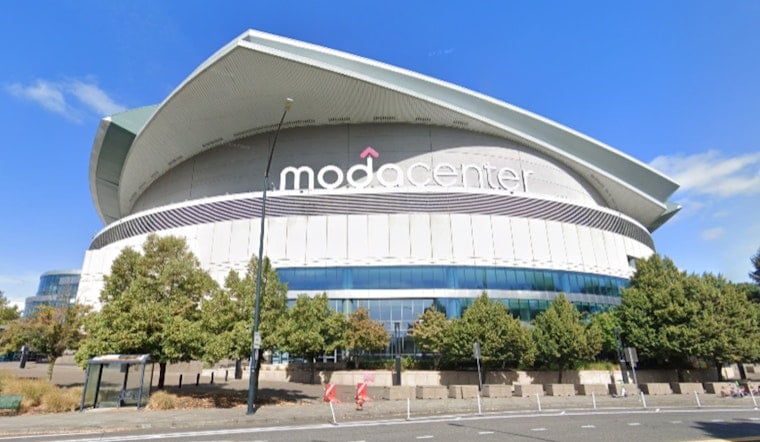
Portland lawmakers are moving to hand a small but symbolically loaded piece of city-owned land across North Ramsey Way from Moda Center to Albina Vision Trust, the nonprofit working to reimagine 94 acres of the Lower Albina neighborhood that includes the Rose Quarter. The push comes as Portland-area elected leaders and the Trail Blazers negotiate whether and how local governments will help fund a $600 million renovation of the arena, and just a day after Multnomah County commissioners voted 4-1 to put up $100 million toward that effort.
City Commissioners Elana Pirtle-Guiney, Sameer Kanal and Dan Ryan are sponsoring a resolution directing city officials to enter development-rights negotiations with Albina Vision Trust, according to The Oregonian/OregonLive. Kanal and Ryan both represent Portland City Council District 2, alongside Pirtle-Guiney, and the resolution is scheduled to go before the city's Life committee on August 11. The parcel itself is relatively small, but city staff say they intend to bring the development-rights agreement back to council at the same time as a new long-term arena lease meant to keep the Trail Blazers in Portland.
A Nonprofit's Long Road Back to Lower Albina
Albina Vision Trust's interest in the site fits into a broader master plan the organization has pursued for years across the district, which also contains Veterans Memorial Coliseum. In September 2025, the trust opened Albina One, a 94-unit affordable housing development on North Flint Avenue near Moda Center that prioritized displaced residents through the city's N/NE Preference Policy, according to OPB. That followed a February 2024 vote by the Portland Public Schools Board of Education to sell its 10.5-acre district headquarters campus in Lower Albina to the trust for a cost-neutral price, clearing the way for up to 1,000 future housing units once the district relocates its administrative offices downtown.
The restorative framing behind those projects traces back to mid-century urban renewal, when construction of Interstate 5, Veterans Memorial Coliseum and district facilities displaced more than 1,000 homes in Lower Albina, a neighborhood that was once home to 80 percent of Portland's Black population. Research from EcoNorthwest cited by the trust and reported by Street Roots puts the resulting loss in generational wealth at roughly $1 billion. Winta Yohannes, executive director of Albina Vision Trust, said the organization hopes to prevent a mothballed arena while advancing economic growth and restorative redevelopment in the district, adding that having a mothballed arena in the district would be detrimental.
New Owner, New Pressure on the Arena Deal
The land negotiations are unfolding against the backdrop of a change in Trail Blazers ownership. Tom Dundon now owns the franchise after the NBA Board of Governors approved its $4.9 billion sale from the Paul Allen estate to Dundon's investment group in March 2026, per the seed reporting from The Oregonian/OregonLive. Dundon has previously pursued a $1 billion redevelopment in the district surrounding the Carolina Hurricanes' arena in Raleigh, North Carolina, and did not respond to a request for comment on the Portland negotiations.
The Oregon Legislature has already moved to back the state's side of the arena math. Senate Bill 1501 established the Oregon Arena Fund earlier this year, providing $360 million in state bond financing for Moda Center upgrades, contingent on the Trail Blazers committing to a 20-year non-relocation lease through at least 2050, according to North Peninsula Review. That state bond issuance requires matching local municipal contributions, which is part of why Multnomah County's $100 million vote this week matters to the broader $600 million renovation price tag.
Housing Dollars Loom Over the Talks
The city's willingness to commit public capital to the arena effort has already drawn scrutiny closer to home. Hoodline reported in earlier coverage of hidden housing funds that Portland administrative memos revealed roughly $106 million in unbudgeted Portland Housing Bureau balances, prompting city council members to debate funding priorities alongside the Moda Center subsidy requests. That fiscal tension has continued even as the Trail Blazers themselves cut costs: the team laid off dozens of business-side staff members in May as part of a post-sale corporate reorganization, a move that drew civic and political scrutiny during the ongoing funding negotiations.
Industry insiders attribute the slow pace of Portland's biggest development pushes to a mix of lackluster developer interest, onerous regulations, high construction costs, and stagnant incomes and rents, among other hurdles, according to The Oregonian/OregonLive. Those same insiders warn the combination of obstacles could lead to a protracted construction slump across the city's megaprojects, which include Lloyd Center, Lower Albina, the OMSI district and the Broadway corridor.
Federal and Regional Money Already in Motion
Money and approvals have also been flowing toward the transportation infrastructure that surrounds the proposed development site. The Federal Highway Administration approved a supplemental environmental assessment for the I-5 Rose Quarter Improvement Project in March 2024, clearing federal environmental hurdles for highway covers designed to reconnect district streets around Moda Center, as reported by BikePortland. The Metro Council followed in April 2025 by authorizing $250 million to the Oregon Department of Transportation for preliminary construction work on the project, after testimony from Albina Vision Trust leaders.
That regional funding built on earlier federal planning support: the U.S. Department of Transportation awarded an $800,000 Reconnecting Communities Pilot Program grant jointly to Albina Vision Trust and the Portland Bureau of Transportation in March 2023 to plan district layouts surrounding the Rose Quarter. With the city resolution headed to the Life committee, city staff have signaled they intend to line up the development-rights agreement with the timeline for a new long-term arena lease, tying the fate of the small parcel across from Moda Center to the much larger question of whether the Trail Blazers stay in Portland for decades to come.





