

























































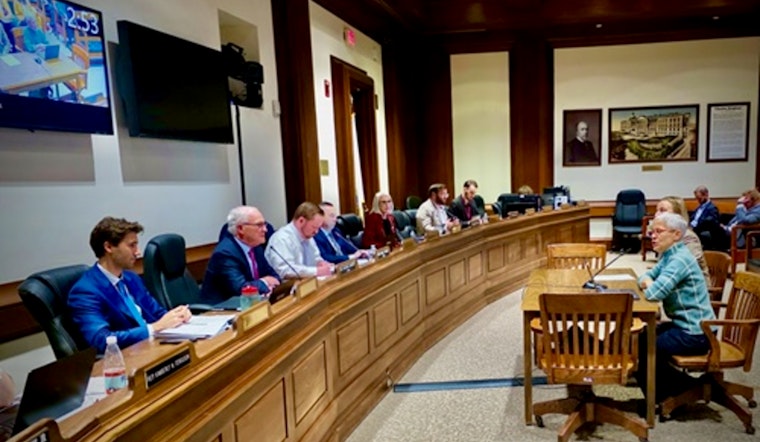
Cambridge is charging ahead in the push against solar production limits, with city officials stepping up to the state legislature last week to voice their concerns. According to a statement from the City of Cambridge, Julie Wormser, the city’s Climate Chief, and Irina Sidorenko, Energy and Sustainability Project Manager, made their case before the Joint Committee on Telecommunications, Utilities and Energy. The city has installed solar projects on various municipal buildings, including schools, but due to state caps, they are dangerously close to a standstill in their solar expansion, threatening their goal of net zero greenhouse gas emissions by 2050.
Cambridge has already net-metered more than 7.3 megawatts of solar energy, but with the goal of expanding further, they risk hitting the 10-megawatt ceiling imposed by state law soon, something that Sidorenko highlighted in her testimony. "If the local and regional caps on municipal solar stay in place, progress will come to a halt," she warned, arguing for the necessity to move off fossil fuels with economic consideration in mind, as reported by the City of Cambridge. Making no bones about the urgency of the situation, Deputy City Manager Kathy Watkins pointed out that the city has solar projects queueing up, ready to contribute to a cleaner future that the current net metering caps are unfortunately stifling.
The municipal solar generation cap is a statewide issue that not only affects Cambridge but also other cities and rural areas looking to leverage solar power for local revenue and energy generation, a point Wormser emphasized, noting the broader impact a lifting of the caps could have. Despite the state bill, H.4144, addressing energy matters, Cambridge along with several other municipalities, is calling for an amendment to do away with these particular constraints, and it's not just for the climate credentials; it's a fiscal move too. By doing so, they argue, the state could back cities in cutting costs while also ramping up clean energy production for the Commonwealth.
The fight for solar isn’t just technical—it’s rooted in equity and survival. Cambridge aims to have all large non-residential buildings carbon-neutral by 2050 and also holds its municipal buildings to the same standard.



