

























































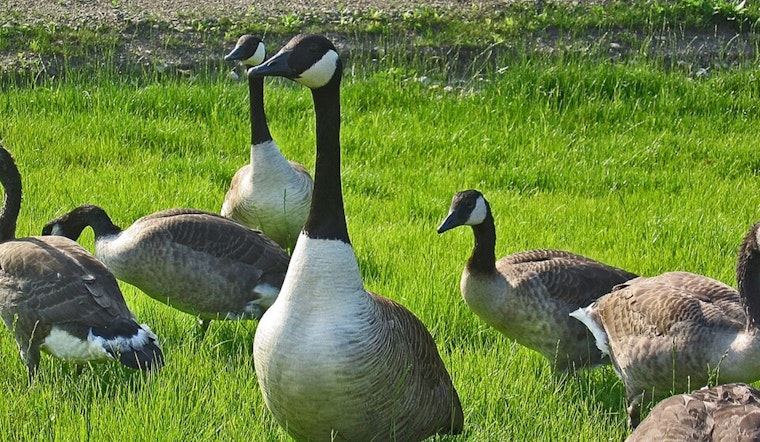
Cameron Park Lake in El Dorado County has become the latest Northern California site where state wildlife testing found bird flu in Canada geese. The detections arrived as migratory flocks began moving through local waterways and have prompted officials to warn park visitors and poultry owners to avoid contact with sick or dead birds. County and state teams say they are stepping up surveillance around ponds, trails and nearby backyard flocks.
Local detections and testing
Samples from at least two Canada geese found at Cameron Park Lake were collected and sent for laboratory analysis; those results were later confirmed by federal testing, local reporting shows. According to KCRA, walkers and birders first noticed unusually large clusters of geese, and state staff retrieved sick and dead birds for submission. FOX40 also reported on the confirmed detections.
State and federal monitoring
Federal authorities keep a running list of highly pathogenic avian influenza detections in wild birds as part of ongoing surveillance across the country. According to USDA APHIS, waterfowl such as ducks and geese can carry HPAI and potentially transport it during migration even when they appear healthy.
What officials are telling the public
State animal-health officials are advising people not to touch or handle sick or dead birds, to keep pets away from affected areas, and to report any unusual bird deaths. The California Department of Food and Agriculture recommends that backyard poultry owners increase biosecurity and report suspect cases via its sick-bird hotline; see CDFA for details and reporting contacts.
Local reaction
People who walk and bird-watch at Cameron Park Lake said they’ve noticed more geese in recent days and are watching the situation closely. “I’ve been videoing them because they’re big clusters of them,” said Launi Varbell, who walks the lake daily, as noted by KCRA.
What to watch for next
Officials say monitoring will continue and any new detections will be posted on federal and state animal-health pages. State agencies continue to emphasize that the risk to the general public remains low; check the CDFA and USDA APHIS pages for updates.





