

























































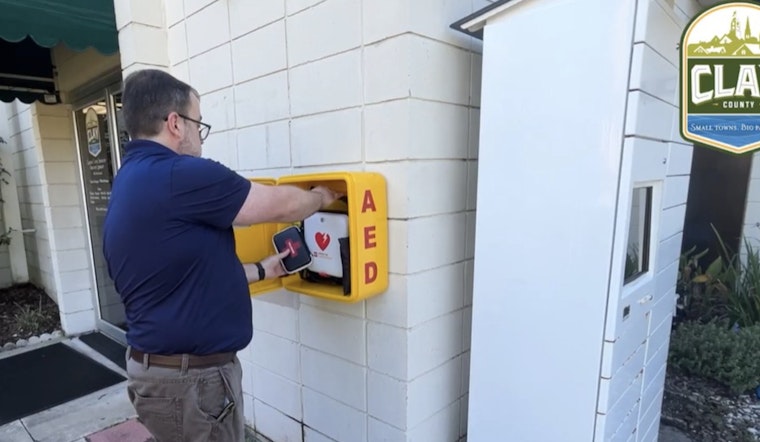
Clay County has solidified its commitment to public health and safety by reaching a significant benchmark in its year-long initiative. As reported by the Clay County's official website, the 200th Automated External Defibrillator (AED) was installed during Sudden Cardiac Arrest Awareness Month. In a push to bolster emergency preparedness, these AED units not only provide tools for cardiac emergencies but also are equipped with Narcan, the medication used to reverse opioid overdoses.
The initiative, launched in October of the previous year, targets high-traffic areas for AED placement. Locations such as parks, sports complexes, government buildings, churches, and senior centers have been prioritized. Interestingly, the funding for this wide-ranging project comes from the National Opioid Settlement. It's a notable stride in the county's bid to eventually place over 500 AEDs throughout the community.
Not just limited to fixed locations, the program – as highlighted on Clay County's website – ensures that even the Clay County Sheriff’s Office and county vehicles are equipped with these lifesaving devices. Each AED is accessible with a code provided by a 911 dispatcher, thereby ensuring they are readily available during an emergency situation.
The Community Paramedicine Program supports these installations by providing public training on how to use AEDs and Narcan. This training helps residents respond effectively during emergencies. The AEDs are also listed on the PulsePoint app, allowing people to locate the nearest device quickly. Each unit is monitored remotely to ensure it stays in working order.
According to the Clay County's website, Clay County plans to continue adding more AEDs and offering additional public training sessions to help residents respond to cardiac arrest or opioid overdose emergencies.





