

























































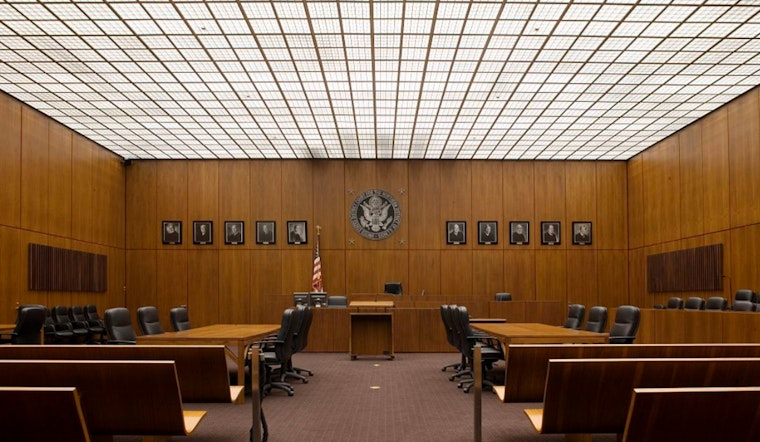
Confusion and compliance, or a lack thereof, have been the prevailing themes leading up to a federal court appearance scheduled for Monday in Chicago. A top official from U.S. Immigration and Customs Enforcement (ICE) was ordered to explain the agency's actions during recent clashes with protesters in the Chicago area, particularly addressing why tear gas continued to be used contrary to a temporary court injunction. However, with the ordered official, Russell Hott, returning to his prior role on the East Coast, there’s uncertainty about who will actually represent ICE in court. WGN reported that Samuel Olson, generally based at the Minnesota field office, is the interim leader for Chicago but might not appear either. Instead, the Department of Justice has suggested that Kyle Harvick from Customs and Border Protection be questioned by Judge Sara Ellis.
Judge Ellis, exhibiting deep concern over potential violations of her temporary restraining order, which originally banned agents from deploying riot control techniques against peaceful protesters and journalists, has now reinforced her mandate. Agents involved in the so-called Operation Midway Blitz are now required to be equipped with body cameras. Despite a Justice Department lawyer's claim that not all agents have such equipment, Ellis stated, according to a CBS News article, "Maybe I wasn't clear yesterday. That wasn't a suggestion," she said. "I am modifying the [temporary restraining order] to include body worn cameras. … It's not up for debate."
The implementation of the Judge's body camera requirement continues to stir controversy. Department of Homeland Security Assistant Secretary Tricia McLaughlin countered the Judge's clarity with a statement on Sunday, declaring, "There is currently no order requiring body cameras, and any suggestion to the contrary is false reporting." McLaughlin also made a point to say DHS would "oppose all efforts to vilify law enforcement and prop up the cause of violent rioters." This, against the backdrop of Ellis's firm stance, highlighted the tension between judicial authority and federal enforcement policy.
Chicago's legal community is playing close attention to the unfolding events. Richard Kling, a clinical professor of law at Chicago-Kent College of Law, noted that Judge Ellis "was not satisfied that ICE was following her order" regarding the use of force against peaceful protesters and insisted on the use of body cameras to ensure accountability. "She watched TV like the rest of us, and apparently realized that ICE was going what ICE wanted to do," Kling told CBS News. As the nation watches, the ramifications of the court's decision could signal a shift in how federal agencies engage with both community members and protest movements amidst calls for transparency and oversight. Meanwhile, the federal government, after a federal judge issued a different order blocking the deployment of the National Guard in Illinois, has appealed to the Supreme Court to intervene, giving the state until 4 p.m. to respond.





