

























































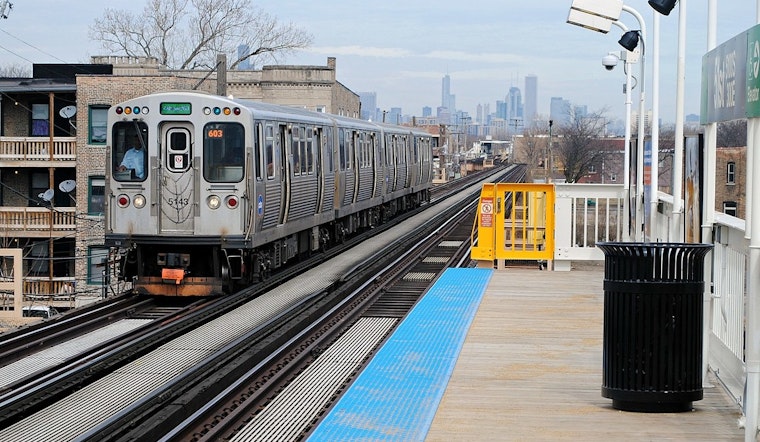
The wheels of legislation continue to turn in Illinois, where a crucial vote looms on a proposed $1.5 billion funding package aimed at salvaging the state's public transit systems from an impending fiscal cliff. This major financial boost, earmarked for the Chicago area's transportation network, seeks to sustain the Chicago Transit Authority (CTA), Pace, and Metra in the wake of pandemic-era federal funding drying up.
Unveiled by state lawmakers, the proposed bill entails a grab bag of taxes, including a new 7% amusement tax on major events and a novel tax on billionaires’ unrealized assets, which, if passed, would position Illinois as the first state to venture into such fiscal waters. Delving into the specifics of the bill, the Chicago Sun-Times reports that this new amusement tax would apply to streaming services alongside tickets for large concerts and sporting events, while the billionaire tax targets a 4.95% cut of their unrealized capital gains.
Despite lawmakers racing against the clock for this legislation, Governor JB Pritzker voiced concerns over parts of the funding proposal. Aligned with his disdain for the speed camera revenue provisions — a measure he suggested pausing due to past troubles and corruption — Pritzker asserted that several elements of the 1,036-page bill need to be hashed out further. "They sprung a whole bunch of things that have never been seen before, so it's very hard to evaluate in a short period of time," said Pritzker, as chronicled by the Chicago Sun-Times.
Pioneering yet contentious, the proposed tax on the unrealized gains of billionaires stands out as an element never before implemented by any state. As Pritzker himself expressed skepticism of this nascent idea, advocacy groups stood by the package's merits, suggesting it is necessary for maintaining a stellar transit system. "The total must add up to at least $1.5 billion in new revenue each year for the Northern Illinois Transit Authority so that people, like my parishioner, can live and move in our state on reliable, safe, modern transit system that Illinois deserves," Erin Coleman Branchaud, of the People's Lobby, told FOX 32 Chicago.
As the state's transit agencies face a growing budget deficit, there is palpable urgency among labor leaders and lawmakers to reach an agreement. The union operatives, such as Illinois AFL-CIO President Tim Drea, have made clear the stakes: a dire need to forestall mass layoffs of transit workers. "Whatever we got to do to get there. The House has five revenue proposals on the table, the Senate did about five. Whatever we’ve got to do to merge those two together, I’m fine with. But we’ve just got to get to $1.5 billion so that the people of Illinois have reliable transit," Drea stated, in an account obtained by the Chicago Sun-Times.
The final hours of the legislative session are ticking away. State representatives such as Kam Buckner, undeterred by the looming deadline and the governor's hesitance, highlighted the critical impact this bill could have on countless jobs, asserting the imperative nature of a timely response. Awaiting a potential last-minute vote, Illinois residents and transit users remain on edge, hoping for a favorable resolution that secures the future of their public transportation system.





