

























































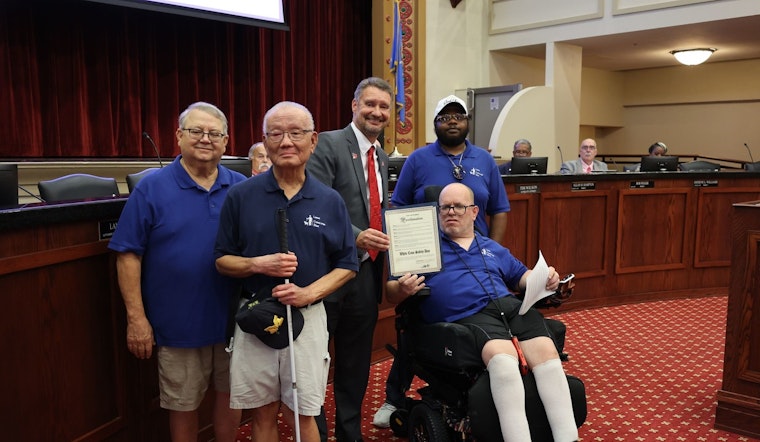
In their latest city council assembly, the leaders of Lawton declared their support for safe and independent navigation for the visually impaired by proclaiming October a month of awareness for the white cane, with a special recognition of White Cane Safety Day today, October 15, according to a recent announcement on the city's website. Highlighting the significance of the white cane—a crucial aid for those who are legally blind—this proclamation serves as an emphatic call for community consciousness and courtesy.
Lawton Council of the Blind was at the Tuesday's meeting where City Manager John Ratliff presented the proclamation, the initiative aims to educate residents on the importance of the white cane, and the proclaimed day corresponds with vigorous advocacy, ensuring that visually impaired citizens can navigate public spaces more confidently and most importantly, safely. The white cane is not merely a tool; it is a symbol of independence guiding those who grasp it across the sprawling expanse of curbs steps, and the uneven pavement of our communities enables those who wield it to partake with less unease in the collective rhythm of daily public life.
As per the city's statement, Oklahoma law mandates that drivers pause their behemoths of steel, at a minimum distance of 15 feet away when approaching a visually impaired person who is identified by the use of a white cane or service animal, to ensure the unobstructed passage and safe crossing of those, whose world is shrouded in persistent dusk. Such legal provisions reflect a societal commitment to uphold the safety and autonomy of visually impaired individuals, granting them their rightful place amid the hustle and bustle of the social tapestry webbed throughout Oklahoma's streets and avenues.
Bolstering the vision of inclusion, the City of Lawton's proclamation not only reminds its citizens of their obligation to safeguard those who navigate their world with different sensory experience it exhort them to observe and respect October 15 as White Cane Safety Day by embracing the white cane as a symbol of independence—an emblem of inclusion that says to all that those with visual disabilities are part and parcel of the burgeoning social and economic life that thrives in our community.





