

























































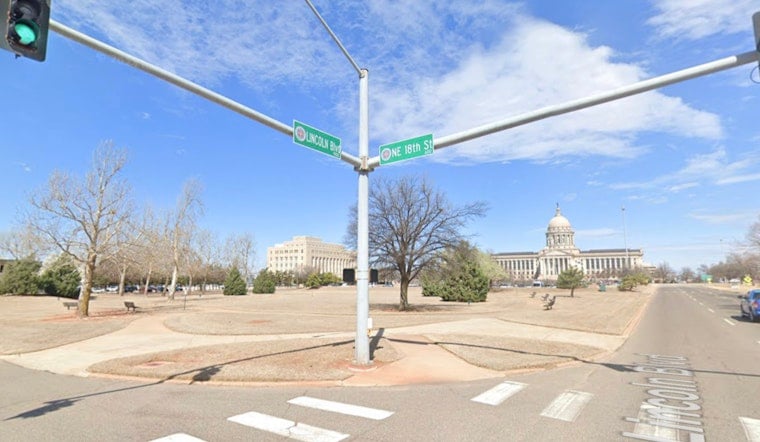
Construction is underway on a 30-foot-tall arch at NE 18th and Lincoln Boulevard, just south of the Oklahoma State Capitol, and a coalition of veterans advocates and tribal leaders now wants to make sure the surrounding grounds include a dedicated monument to the state's Native American service members. Former Chickasaw Nation Governor Bill Anoatubby has joined the Norman-based Force 50 Foundation in pushing for what organizers are calling the Native American Warrior Monument, envisioned as a tribute to Oklahoma's first American veterans.
The push comes as the State Capitol Arch itself nears reality after being funded through House Bill 4012, signed into law by Governor Kevin Stitt, according to KOKH. The bill, authored by Representative Mark McBride, created the funding mechanism for the arch, and lawmakers previously confirmed the $4.3 million came from the Legacy Capital Financing Fund, according to the Oklahoma House of Representatives. The arch itself commemorates the service of the Oklahoma National Guard's 45th Infantry Division, and the Native American Warrior Monument would cover a portion of the arch grounds once complete.
Force 50 Foundation members Pete Reed and John Jeffords are working to add the monument to the site, with Anoatubby speaking directly to the significance the project holds for Native American veterans across Oklahoma. The station's report notes that the arch's roots stretch back to 1917, when the Capitol's original architectural plans first called for a triumphal arch that was ultimately shelved for lack of funding.
A Century-Old Vision Finally Takes Shape
State and tribal officials marked the project's formal start with a groundbreaking ceremony in December 2024 for the arch and the surrounding Veterans Park, a 30-foot-tall, 60-foot-wide structure south of the Capitol's visitors' parking lot, according to the Oklahoma Office of Management and Enterprise Services. State Senator Brenda Stanley, who authored the funding bill alongside Rep. McBride, said at the time that the park would include walking paths and spaces honoring Native American, female, and African American service members, as reported by News From The States. Hoodline previously reported on Stanley's Thunderbird Medal honor for her role in securing that funding.
Once fundraising for the Native American Warrior Monument is complete, the Oklahoma Arts Council will launch its Art in Public Places process, which includes artist selection and a design proposal phase, per KOKH. Any completed artwork would then join the permanent collection of the Oklahoma Public Art Collection. Other monument plans are also in the works for additional groups of Oklahomans, according to the outlet, though specifics on those projects have not yet been detailed.
Why Native Veterans Hold Outsized Military History in Oklahoma
The push for dedicated recognition reflects a broader statistical reality: roughly 19 percent of Native Americans have served in the U.S. military, the highest per-capita rate of any racial or ethnic group in the country, according to U.S. Department of Defense data cited by Team Rubicon. Native Americans have served in every major U.S. conflict for more than two centuries. Native American women also make up about 20 percent of all Indigenous service members, a higher rate of female military participation than any other racial or ethnic demographic, according to the U.S. Department of Veterans Affairs.
That history is embedded directly in Oklahoma's own National Guard heritage. The 45th Infantry Division, which the new Capitol Arch commemorates, originally wore a yellow swastika shoulder patch symbolizing Southwestern Native heritage before replacing it in 1939 with a golden Thunderbird emblem designed by Kiowa artist Woodrow Wilson Big Bow, according to the Oklahoma National Guard Museum. The emblem was changed amid the rise of Nazi Germany.
Anoatubby himself brings personal military credibility to the campaign. The former Chickasaw Nation governor, who announced his retirement in June after nearly four decades leading the tribe, served eight years in the Oklahoma Army National Guard from 1963 to 1971 and rose to the rank of staff sergeant, according to a Chickasaw Nation announcement. Under his leadership, the tribe's economic impact grew to more than $8 billion.
Bipartisan Backing and What Comes Next
The campaign has also drawn support from Oklahoma's political establishment. Former Governors Frank Keating and Brad Henry joined the Force 50 Foundation in November as special advisors to help lead the monument campaign, joining Anoatubby on the initiative's leadership team, according to the Force 50 Foundation. The organization, based in Norman, grew out of the state-led Oklahoma Veterans Pilot Program, which coordinates housing, job training, and health resources for veterans across the state, and it shares updates on the monument push through its website, Facebook, and Instagram pages.
For now, the timeline hinges on private fundraising reaching the point where the Oklahoma Arts Council can formally begin its public art selection process. How the eventual monuments to female and African American veterans mentioned by Sen. Stanley will fit alongside the Native American Warrior Monument within the Capitol's Veterans Park remains to be determined as the broader project moves forward.





