

























































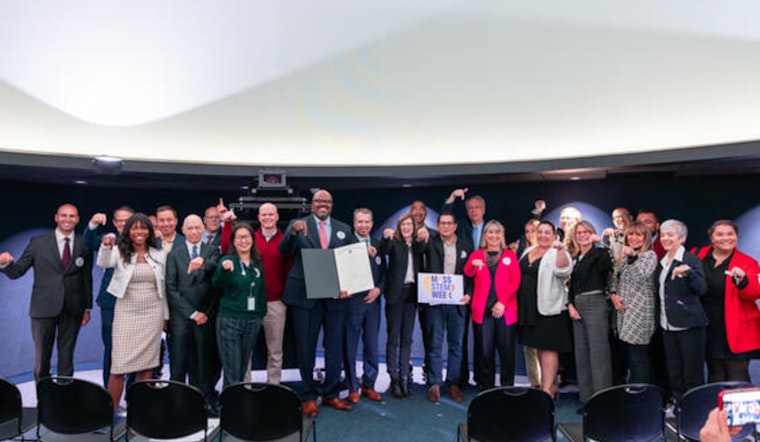
The Healey-Driscoll administration has announced more than $13.5 million in Skills Capital Grants to expand STEM and vocational training opportunities across Massachusetts. According to the Massachusetts government website, the funds will support the purchase and installation of advanced technology at 66 high schools, colleges, and workforce organizations. The announcement took place at Framingham State University.
Governor Maura Healey said the initiative reflects the state’s commitment to strengthening innovation and education. Lieutenant Governor Kim Driscoll added that the grants will help modernize learning spaces and support hands-on experiences in technical education as STEM Week 2025 begins.
Since 2023, the Workforce Skills Cabinet—comprising the Executive Offices of Education, Labor and Workforce Development, and Economic Development—has distributed nearly $45 million through almost 90 awards. Education Secretary Dr. Patrick Tutwiler and Labor and Workforce Development Secretary Lauren Jones emphasized that the program supports career readiness and workforce development.
Framingham State University received $155,000 for its Nursing program to purchase patient simulator equipment, which will expand hands-on training opportunities. The list of recipients includes institutions across Massachusetts, such as ACCEPT Education Collaborative in Natick and Worcester State University in Worcester, each receiving funding for industry-focused program enhancements.
The administration’s efforts also include expanding Career Technical Education (CTE), Early College, and work-based learning programs. Legislative leaders, including Senate President Karen E. Spilka and Senator Jason Lewis, commended the initiative for its role in preparing students for high-demand careers and supporting the state’s continued focus on STEM education.





