

























































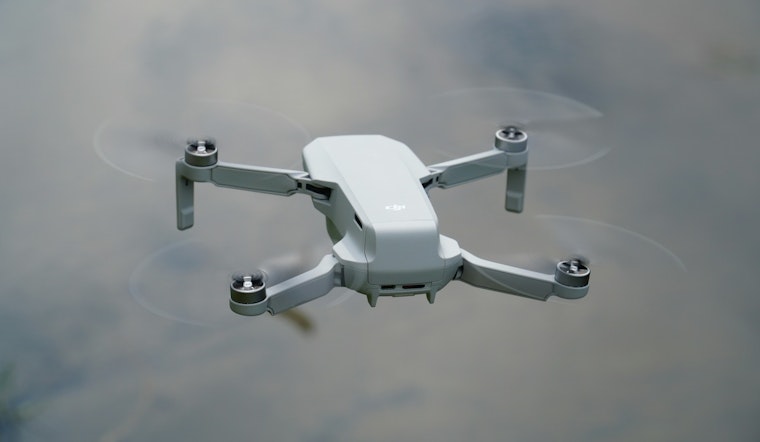
MIT's latest innovation could well change how engineers tackle the design of complex systems. Tackling the unpredictable nature of real-world variables, MIT researchers have developed an advanced framework for system design that accounts for the uncertainties inherent in electronic devices and their components, as per a recent report from MIT News. This approach stands to significantly aid in constructing more robust and sophisticated technologies like delivery drones, autonomous vehicles, and even comprehensive transportation networks.
Confronting the challenge head-on, the team has created a method that is intended to not just settle for best-case or worst-case scenarios. Instead, their technique models a broad spectrum of potential outcomes that could emerge from each interconnected part of a device, which is a leap forward in managing the uncertainty element. "In practice, the components in a device never behave exactly like you think they will. If someone has a sensor whose performance is uncertain, and an algorithm that is uncertain, and the design of a robot that is also uncertain, now they have a way to mix all these uncertainties together so they can come up with a better design," Gioele Zardini, Assistant Professor of Civil and Environmental Engineering at MIT, told MIT News.
The new method revolves around the concept of co-design, which breaks down a complex problem into manageable parts, allowing engineers to efficiently strike a balance between performance and cost. By incorporating category theory into their framework, the researchers managed to simplify the problem, while still fully capturing the many variables in play. This could potentially streamline the design process for engineers irrespective of their expertise in any particular technological domain.
Designing systems to be optimal under uncertainty can often involve complicated and specialized knowledge. But the MIT framework allows for reconfiguration of components without compromising the mathematical structure of the design process. "Designing an entire UAV isn't feasible for just one person, but designing a component of a UAV is. By providing the framework for how these components work together in a way that considers uncertainty, we've made it easier for people to evaluate the performance of the entire UAV system," Yujun Huang, an MIT graduate student, explained in an interview with MIT News.
One practical application of the framework was in choosing the right balance of perception systems and batteries for a drone. The approach allowed the team to consider the chance that different technologies would meet or fail the requirements given uncertain conditions such as weather. "Our system provides the tradeoffs, and then the user can reason about the design," remarked Zardini, emphasizing the deeper insights their framework could offer compared to conventional methods.
Looking ahead, the MIT research team is focused on further refining their algorithms for even greater computational efficiency and extending their framework to systems designed by multiple parties with both collaborative and competitive interests. Aaron Ames, Professor of Mechanical and Civil Engineering at Caltech, who was not involved in the research, highlighted the importance of this development: "As the complexity of systems grow, and involves more disparate components, we need a formal framework in which to design these systems. This paper presents a way to compose large systems from modular components, understand design trade-offs, and importantly do so with a notion of uncertainty."





