

























































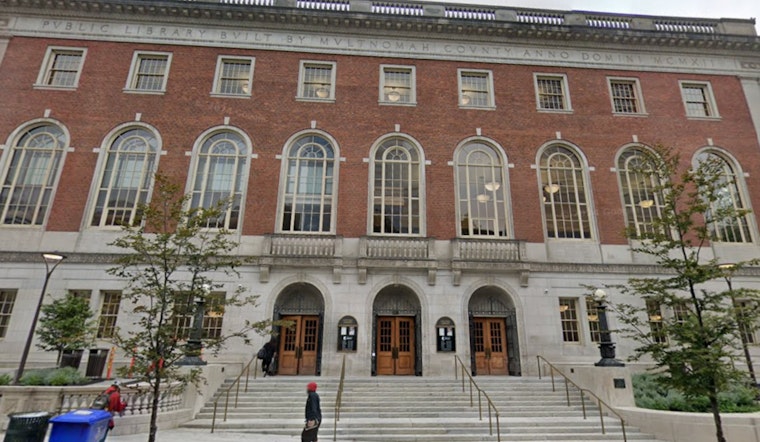
Multnomah County is upping its game in enhancing safety at the Central Library and surrounding areas, with the Board of Commissioners being briefed on recent and upcoming security measures. As reported by Multnomah County News, Chair Jessica Vega Pederson expressed gratitude for the rapid progress, noting the community's expectation for coordinated efforts in such critical work.
Library Director Annie Lewis detailed the hike in safety investments, which saw an 85% increase from fiscal years 2018-19 to 2025-26. Additionally, security at the library now includes newly contracted security officers, round-the-clock security camera monitoring, and support teams ready to respond 24/7. But, still unresolved is the need for considering the addition of weapons detection systems, which the Library is still evaluating.
Among the security reinforcements, Portland Police Bureau Public Safety Support Specialists have started doing walkthroughs, combined with street-based outreach provided by the county's Behavioral Health Division contractors. With security officers planted at entry points, increased patrols are being executed, as detailed by Multnomah County News. Notably, the library has whittled down the rate of incidents since these measures were set in motion in July.
More security upgrades are expected, including the very likely installation of vapor sensors in restrooms. The sensors are geared toward detecting illicit substances, according to Lewis, to amp up patron and staff safety. "We’re also updating our weapons policy to be more clear for library patrons about weapons that are excluded from entering the library," Lewis added in an interview with Multnomah County News.
When it comes to the proposed weapons detection systems, Lewis mentioned that the Library has been evaluating the impact of such systems. Specifically discussing a system from contractor Evolv, which relies on AI to detect metals, the library leader indicated that the equity impacts of security measures warrant careful consideration. A racial equity impact assessment found potential disproportionate effects on marginalized communities, and such disparities have to be accounted for before making decisions.
The balance between safety and accessibility proved to be a significant touchpoint in the discussion. Commissioner Julia Brim-Edwards focused on the need for effective rule enforcement, highlighting the challenge of hidden weapons and how current protocols involve library staff calling 911 without directly engaging with individuals carrying firearms. The overarching progress, however, hinged less on metal detectors and more on addressing broader system-level issues that affect community safety and wellness, as stated by Lewis.
In her closing remarks, Chair Vega Pederson underscored the importance of the ongoing dialogues and decisions that will shape the library’s future approach to safety, indicating that the conversations will extend both within and beyond the library’s walls to include community voices, as revealed in the commissioners' discussion.



