

























































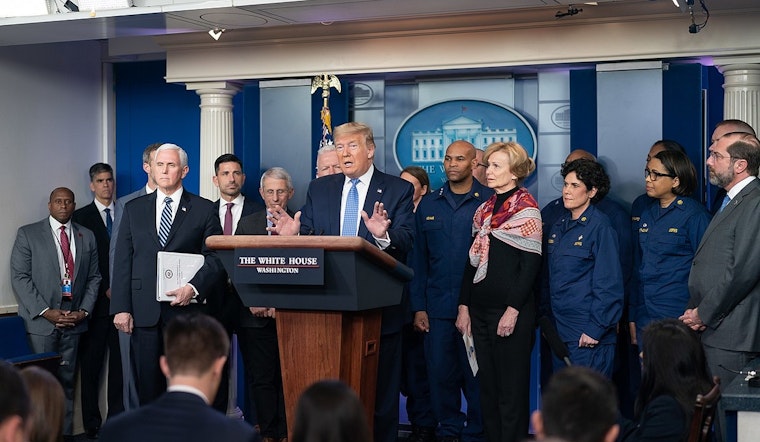
In recent remarks during a visit to Japan, President Donald Trump has doubled down on his intentions to get tough on crime in US cities, particularly those under democratic leadership. "We’re sending in our National Guard and if we need more than the National Guard, we’ll send more than the National Guard because we’re going to have safe cities," Trump declared, as reported by NBC Chicago. The President's pivot to law and order comes in the wake of clashes with local governments and a series of legal battles that have, to date, hampered his administration's plans for military deployment in certain cities.
One city potentially facing increased federal intervention is New York, where a suspect is now in custody following a subway slasher case. New York Police arrested 27-year-old Brooklyn resident Odyssey Head on a slew of charges, including three counts of attempted murder. The NYPD's investigation is ongoing as they look to firmly establish any connections between the violent incident and a series of similar assaults over the weekend. This criminal uptick prompted Trump to publicly consider significantly upping his federal response to what he terms "blue-city crime," an issue he addressed in comments to American troops, according to FOX News.
Trump's aggressive stance on urban crime has stirred varied opinions from local leadership, with several mayors and governors expressing staunch opposition. His administration has notably faced setbacks in Chicago, where U.S. District Judge April Perry has temporarily blocked National Guard deployment pending further court decisions or intervention from the U.S. Supreme Court. Despite these hurdles, the administration has signaled a willingness to extend military presence in areas where it has already gained a foothold, including Washington, D.C., and Memphis, Tennessee.
The President's reproach was not reserved only for criminal elements; he also directed criticisms toward Illinois Gov. J.B. Pritzker for his handling of gun violence in Chicago. Meanwhile, Trump lauded the purported success of his policies in Washington, D.C., asserting, "We're not going to have people killed in our cities," a firm commitment to public safety, and indicative of his readiness to deploy greater resources than the National Guard into troubled urban zones.





.jpg)