

























































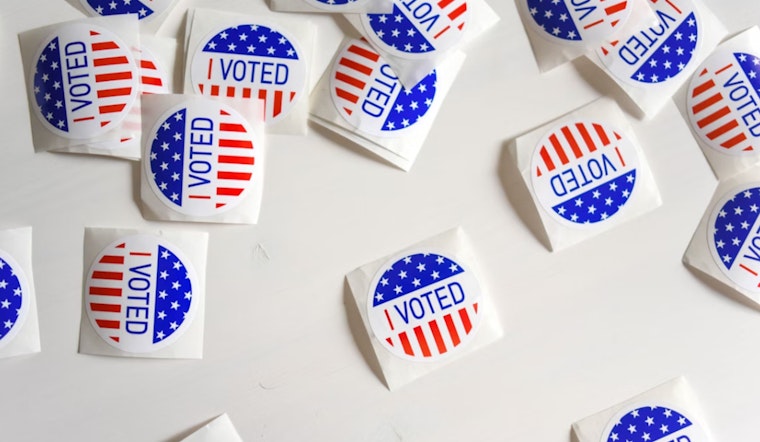
New statewide polls show Proposition 50 — the Legislature's plan to redraw California's congressional map — is heading toward a likely win while an unexpected Republican uptick is reshaping the early governor field. Voters increasingly treat the measure as a national referendum rather than a narrowly technical map fight. With the Nov. 4 special election just days away, the fresh numbers sharpen the stakes for Sacramento and for national strategists watching which party controls the next round of congressional maps.
Latest polls and what they show
According to Emerson College Polling, 57% of likely voters say they would vote yes on Prop 50 while 37% oppose it, and the survey reports Republican Steve Hilton at 16% against Democrat Katie Porter at 15% in an early multi‑candidate test. The Emerson survey, conducted last Monday and Tuesday, sampled 900 likely voters and reports a credibility interval roughly equivalent to a ±3.2‑point margin. Emerson's release also flagged rising support among demographic groups that were less enthusiastic earlier in the campaign.
A separate CBS News/YouGov survey finds even stronger backing — roughly 62% in favor among likely voters — and shows many yes voters are motivated by opposition to President Trump rather than solely local mapping arguments. The CBS News poll was fielded last Thursday through Tuesday and included about 1,500 registered Californians for its likely‑voter analysis. The network's write‑up underscores that the national frame is helping the measure's margin among likely special‑election voters, according to CBS News.
What a "Yes" would change
According to the Legislative Analyst's Office, Proposition 50 would let the Legislature adopt new congressional boundaries that would take effect for the 2026 election and remain in place through 2030, with the independent Citizens Redistricting Commission scheduled to resume mapmaking in 2031. The LAO also notes modest one‑time county and state costs for election administration and includes side‑by‑side map visuals in the official voter guide mailed to all households with voters.
Money, messaging and momentum
Campaign filings and reporting show heavy spending and nationalized messaging: the Secretary of State filings cited in recent coverage put total reported spending so far at roughly $139 million, and high‑profile endorsements and ad buys have amplified the national frame. That spending gap and national attention appear to be shaping turnout and persuading some voters who had been undecided earlier in the autumn, as local coverage has documented, according to SFGATE.
The governor race reshaped
Beyond the ballot measure, the Emerson numbers show a surprisingly fluid early governor field: a plurality of voters remain undecided and the survey places Hilton and Porter essentially tied in this early testing. With nearly 40% of likely voters still uncommitted, the poll suggests the race is still nascent and could shift quickly as campaigns and ad buys accelerate, according to Emerson College Polling.
What to watch next
Ballots began mailing in early October and the special election is set for Nov. 4, giving both sides limited time to move undecided voters. For voters who want the official legal language, maps and implementation details, see the state's Official Voter Information Guide and the Legislative Analyst's Office write‑up.





