

























































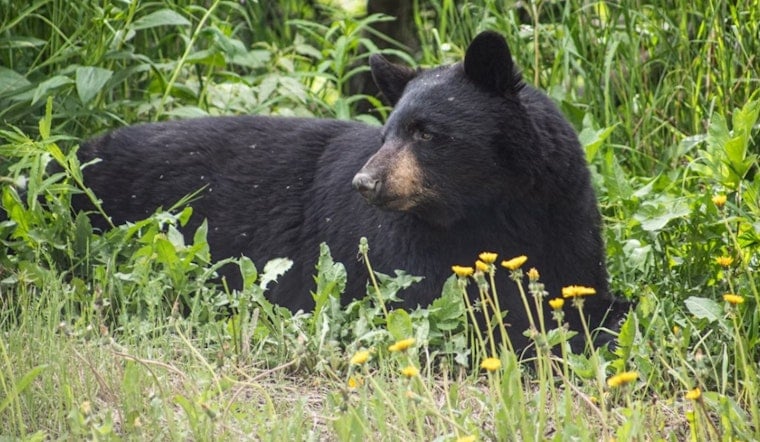
A black bear treated a South Lake Tahoe vacation cabin like a drive-thru window this week, slipping through an open bedroom window three separate times to grab ribeye steaks, brioche buns and a croissant before settling onto the outdoor deck to eat its haul. Security footage from the cabin captured the entire sequence, turning what could have been a costly break-in into a viral moment.
The footage, first reported by FOX 5 Atlanta, shows the bear repeatedly slipping in and out of the same bedroom window to snag its stolen snacks. A more detailed breakdown of the video, reported by FOX 29, identifies the exact items taken: ribeye steaks, brioche buns and a croissant, all carried off to be eaten on the deck outside. The open window offered the bear an easy, unobstructed path into the home, underscoring how vulnerable vacation rentals can be when doors and windows are left ajar in bear country.
A Pattern of Break-Ins Across the Basin
This is far from an isolated incident in the region. In August 2025, a black bear broke through a window into an unoccupied South Lake Tahoe home and turned on a gas stove while foraging inside, according to the California Department of Fish and Wildlife. Firefighters had to shut off the gas line to prevent a structure fire, a stark reminder that these encounters carry risks well beyond a ruined dinner.
State wildlife officials told the South Lake Tahoe City Council in December that the Tahoe Basin has the second-highest black bear density in California, and that a core 9% of repeat-offender bears are responsible for 61% of all residential break-ins, according to the Tahoe Daily Tribune. That statistic points to a small population of highly habituated bears driving most of the trouble homeowners and renters experience.
From Hazing to Euthanasia When Bears Cross the Line
The state's response to habituated bears follows a tiered system. Under its Trap-Tag-Haze initiative established in 2020, the California Department of Fish and Wildlife reported that officers had captured, tagged, genetically profiled and non-lethally hazed more than 360 individual bears in the Lake Tahoe Basin to curb human-wildlife conflicts. But that approach has limits: in June, the department euthanized a yearling black bear in South Lake Tahoe after DNA testing matched the animal to a physical encounter at Fallen Leaf Lake, a case the Tahoe Daily Tribune reported adhered to state protocols mandating lethal removal once a bear poses a direct public safety threat.
The stakes for the bears themselves are significant. A study published in Global Ecology and Conservation, examining 382 bear deaths in the Lake Tahoe Basin and Great Basin, found that administrative removals tied to home break-ins and vehicle collisions were the two leading causes of bear mortality, according to the Wildlife Conservation Society. It's the research behind the familiar warning that a fed bear is often a dead bear.
Local Rules Aim to Keep Food Away From Bears
South Lake Tahoe's city council has been trying to get ahead of the problem. In April, the council unanimously advanced a policy package to raise municipal fines for improper garbage disposal, require Bear Aware education materials for vacation rentals, and push state officials to prioritize relocation over euthanasia when possible, per the Tahoe Daily Tribune. Under city code, residents cannot place trash curbside before 6 a.m. on collection days, and property owners are encouraged to use heavy-duty metal bear boxes to keep food attractants locked away overnight.
The federal government has stepped up enforcement too. A March Forest Order covering the Lake Tahoe Basin Management Unit requires all unattended food and refuse on federal public lands to be locked in bear-resistant containers, with violators facing fines or imprisonment under rules from the USDA Forest Service. Meanwhile, the state's 2025 Black Bear Conservation and Management Plan estimates California's black bear population at 60,000 to 80,000 animals, a sharp increase over recent decades that has pushed more bears into contact with mountain communities like South Lake Tahoe.
The steak heist is only the latest in a string of Tahoe-area bear encounters Hoodline has followed this year, including a bear spray showdown outside a vacation home. For now, wildlife officials continue to stress that open windows, unsecured trash and unattended food remain the biggest invitations bears in the basin can get.





