

























































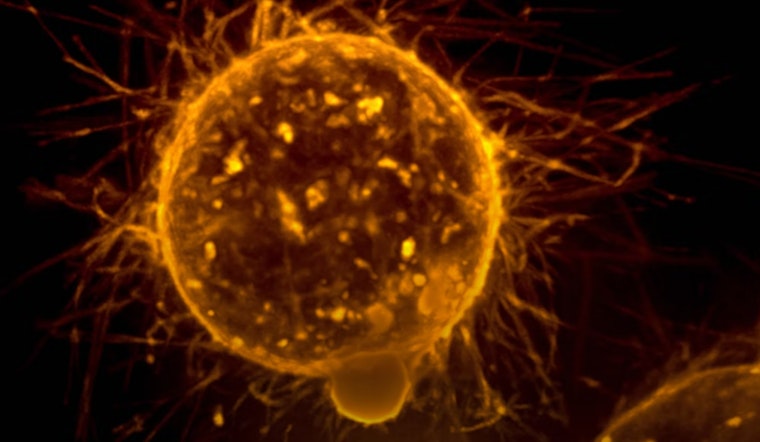
In the ongoing battle against cancer, a significant breakthrough has been made at the Massachusetts Institute of Technology (MIT) and Harvard Medical School, where researchers have engineered a new type of immune cell that could revolutionize treatment. Known as CAR-NK (natural killer) cells, these engineered soldiers in the body's defense system have been redesigned to be less likely to provoke a patient's immune system into attacking them, an issue that's been a stumbling block for this kind of therapy.
Although similar to their CAR-T cell cousins in their ability to target and destroy cancer cells, these enhanced CAR-NK cells could potentially be used right when patients are diagnosed ― a faster approach compared to the traditional weeks-long process needed to cultivate CAR-T cells. An article from MIT News quotes MIT professor of biology Jianzhu Chen, stating, "This enables us to do one-step engineering of CAR-NK cells that can avoid rejection by host T cells and other immune cells. And, they kill cancer cells better and they’re safer."
In a paper published in Nature Communications, the team demonstrated their findings using mice with humanized immune systems. The mice were injected with lymphoma cells and then treated with the newly developed CAR-NK cells. Not only did these mice maintain their population of engineered NK cells for three weeks, but the cells were also successful in annihilating most of the cancer.
The innovative step essentially involves hiding the engineered NK cells from a patient's immune system by omitting surface proteins known as HLA class 1 proteins, which typically would mark the cells as foreign invaders. As reported, Fuguo Liu, a postdoc at the Koch Institute and a research fellow at Dana-Farber, is the paper's lead author and worked with a team that developed a way to interfere with genes for HLA class 1 using siRNA, while also delivering the CAR gene. Together with PD-L1 or single-chain HLA-E (SCE) proteins, these modifications give CAR-NK cells the ability to not just elude destruction but also enhance their cancer-killing abilities.
The shift to these engineered cells presents a multitude of benefits, including a reduction in the likelihood of cytokine release syndrome, a hazardous side effect of some immunotherapies. The practical implications span not only for cancer therapies but further into treating autoimmune disorders such as lupus. In collaboration with Dana-Farber, the researchers plan to set a clinical trial in motion to validate these findings in humans. This research was made possible through funding from a variety of sources, including Skyline Therapeutics and National Cancer Institute grants, setting the stage for future treatment advancements.



