

























































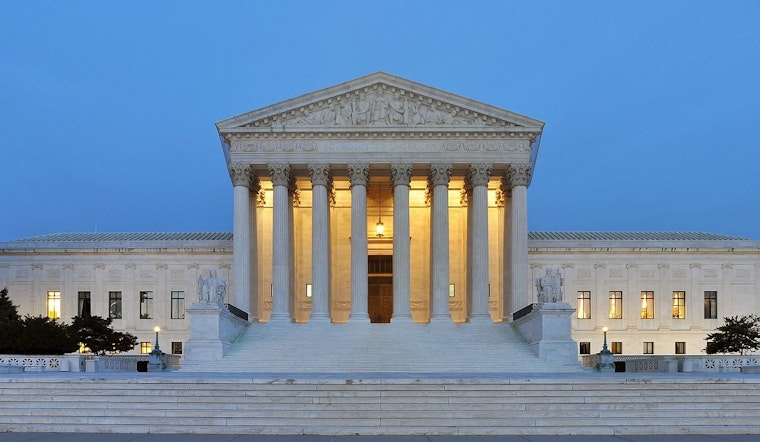
The contentious issue of President Trump's push to deploy the National Guard in Chicago has now reached the zenith of the judicial branch – the United States Supreme Court. In an escalating response to protests, described by federal officials as violent resistance, which have been tagged as a rebellion by Trump. Reflecting previous military interventions in Portland and Los Angeles, where federal immigration law enforcement has sparked local unrest, the administration has positioned the military's presence as a bid to restore order. Meanwhile, critics have deemed this move an overreach of executive power, raising constitutional concerns that have swiftly climbed the legal ladder to the nation's highest court.
According to a report by NBC Chicago, former federal prosecutor Ron Safer expressed a belief, albeit with a degree of certainty clouded by the court's swing towards executive latitude, that Trump is likely to prevail. He predicts a narrow ruling in Trump's favor, "five-to-four…closer than some of the other decisions." This aligns with the Supreme Court's current makeup, which tilts heavily in favor of the Republican appointees, three of whom were nominated by Trump himself.
Simultaneously, President Trump looks to leverage a recent ruling from the 9th US Circuit Court of Appeals that upheld his National Guard deployment in Oregon. Trump's administration asserts that such military action is, at most, marginally reviewable by the courts and, in its essence, demands great deference to the executive's judgment. As stated in a report from CNN, the Department of Justice (DOJ) leans into an 1827 Supreme Court precedent, Martin v. Mott, to bolster its argument and seeks to draw parallels between historical militarization and the current administration's actions.
Amidst the legal tussle, there has been a volley of briefs and counter-arguments. Illinois officials, grappling with the Trump administration's narrative, have pointed to state and local law enforcement's adequacy in managing protests. A poignant assertion by Illinois authorities, as quoted by CNN, underlines the difference in circumstances between the tumult of the War of 1812 and the present-day protests, stating that there is "no credible evidence to the contrary" that would necessitate the Guard's deployment.
The velocity at which this case is traveling indicates that the Supreme Court may reach a decision quite soon, potentially impacting the landscape of federal responses to civic unrest. Many groups and political figures have filed amicus briefs, including the Chicago Headline Club, to challenge the deployment of troops and protect the rights of protesters and journalists from federal overreach – this, according to the same NBC Chicago investigation.
With local skirmishes swelling into a national debate, the Supreme Court's impending ruling will not only affect Chicago but set a precedent with far-reaching implications for how federal authority is exercised in times of civil strife and the intricate balance of power between the states and the executive.





