

























































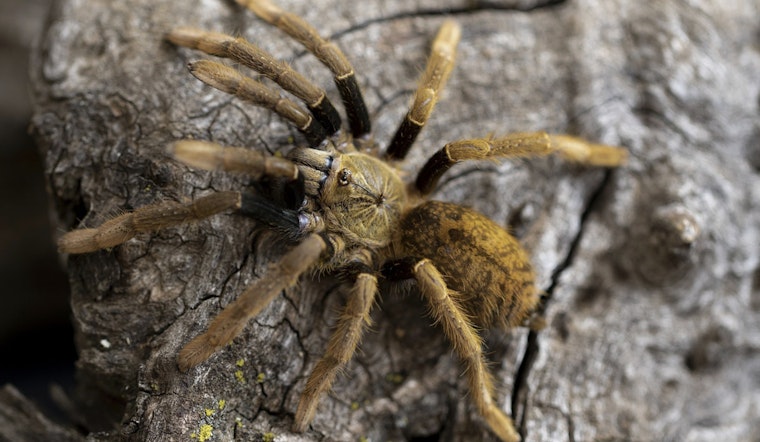
At the University of Missouri–St. Louis, a poster of the 1955 film Tarantula hangs in Room 235 of the Research Building, depicting spiders as classic horror figures. However, doctoral candidate Becky Hansis-O’Neill from the Department of Biology offers a contrasting perspective. According to a University of Missouri–St. Louis report, Hansis-O’Neill refers to tarantulas as "cute" and "pretty," and believes they have distinct "personalities."
Becky Hansis-O’Neill’s research focuses on the growth patterns of more than 200 baby tarantulas, examining how factors like diet and temperature influence their development. In an interview with the University of Missouri–St. Louis publication, she pointed out the limited amount of existing research on tarantulas. The study, conducted in Professor Aimee Dunlap’s Cognitive Ecology Lab and supported by undergraduate research assistants, has drawn interest from the Saint Louis Zoo and the Missouri Department of Conservation for its potential contributions to understanding these species.
The research examines both tarantula growth and their interactions with the environment. Hansis-O’Neill is measuring tarantula heart rates to track changes during stress or after feeding. The study, conducted in partnership with the Missouri Department of Conservation, also includes surveys of tarantula populations across Missouri, which lies at the northern boundary of their natural habitat.
Hansis-O’Neill is also investigating tarantulas' diet and their role in ecosystems, considering how they might affect other species. She expressed interest in studying what and how much tarantulas eat, which could have wider ecological effects, such as controlling grasshopper populations.
The work at the University of Missouri–St. Louis represents one of the few research projects exploring tarantulas beyond basic classification. Hansis-O’Neill and her team are adding important information to a field with many unknowns, potentially shifting the traditional image of tarantulas from one based on horror and folklore to one focused on their biological and ecological roles.





