

























































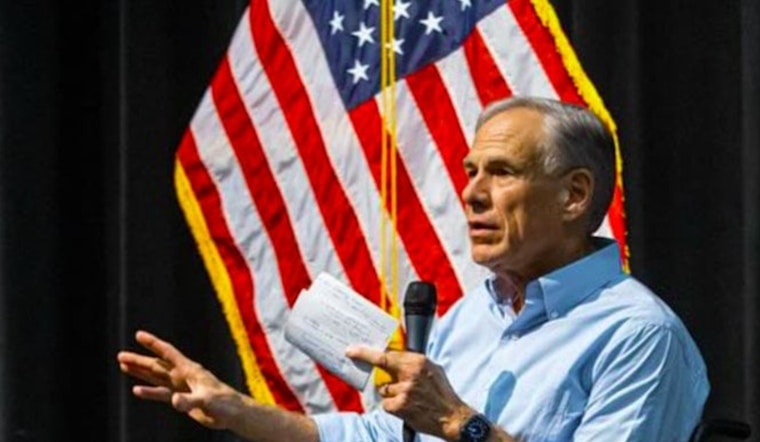
Gov. Greg Abbott on Tuesday formally labeled the Muslim Brotherhood and the Council on American-Islamic Relations (CAIR) as foreign terrorist and transnational criminal organizations under Texas law, a move that bars them from buying land in the state and opens the door to lawsuits aimed at shutting down their operations. The governor's proclamation leans on statutes passed this year that expand Texas' power to restrict real estate purchases and to seek civil remedies against groups the state calls a public nuisance.
Abbott announced the designation on X, saying the signed proclamation had been filed in Austin and citing authority granted to his office under recent legislation. "Today, I designated the Muslim Brotherhood and Council on American-Islamic Relations as foreign terrorist and transnational criminal organizations," Abbott wrote, according to Gov. Greg Abbott on X. He said the proclamation relies on the Texas Property Code and the Civil Practice & Remedies Code as its legal foundation.
What The Proclamation Does
The document points to new provisions in the Texas Property Code that let the governor declare an entity subject to a ban on purchasing or acquiring real property in Texas. Those provisions, added by the Legislature earlier this year, give the governor authority to "designate a country or a transnational criminal organization or other entity" that will be restricted from buying land, according to the Texas Property Code. Abbott's proclamation applies that power to the Muslim Brotherhood and CAIR and states that entities designated in this way "may not purchase or otherwise acquire an interest in real property in this state."
How The State Can Sue And Seek Remedies
The proclamation also leans on civil-remedy provisions that allow the state to seek injunctions, monetary penalties, and, in some circumstances, seizure of property tied to an organization found to be operating as a public nuisance. Under state law, a district attorney, county attorney, or the attorney general may file civil actions against a criminal street gang or a foreign terrorist organization and seek damages, court costs, and the seizure of certain property, as outlined in the Texas Civil Practice & Remedies Code. Abbott's directive instructs the attorney general to use those tools to seek injunctions and shutdowns where the state deems it necessary.
Federal Case And FBI Contacts Cited In The Proclamation
In explaining the designations, Abbott's proclamation points to the federal Holy Land Foundation terrorism-financing case and notes that CAIR appeared as an unindicted co-conspirator in government filings in that prosecution, a detail preserved in the trial record. Court papers from United States v. Holy Land Foundation included a public list of unindicted co-conspirators that prosecutors filed in the case, and those documents are part of the public record. The proclamation also repeats a claim, reflected in congressional hearings and Department of Justice correspondence, that the FBI suspended certain formal contacts with CAIR after evidence was introduced in the Holy Land Foundation trial, as described in the congressional record. The filings are available in United States v. Holy Land Foundation, with related materials on Congress.gov.
Reactions And Civil Rights Concerns
Civil-rights organizations and Muslim advocates have long criticized Abbott's involvement in disputes over Muslim community projects and warned that such actions risk singling out and stigmatizing American Muslim institutions. Local reporting on the governor's earlier moves targeting the proposed EPIC City development in Collin County has highlighted the broader tensions between his office and Muslim community organizers. Critics argue that designations like the one issued this week could chill civic participation and are likely to trigger court challenges. CAIR and allied advocacy groups have repeatedly rejected allegations tying the organization to terrorism and have pointed to court rulings and later clarifications in their defense. That back-and-forth is documented in coverage by the Houston Chronicle and in materials published by CAIR Texas.
Local Context And Recent Laws
Abbott's proclamation builds on a package of laws enacted this year that tightened restrictions on land purchases by foreign and other designated entities and created new statutory causes of action for the state. Senate Bill 17 amended the Property Code to include the land-purchase restrictions the governor cited, and other bills he signed earlier in the year addressed related land-use rules and enforcement powers. Ongoing controversy over projects such as the EPIC City proposal has formed a backdrop for these policy changes, and federal agencies have at times reviewed or investigated such developments. The Department of Justice previously closed a civil rights investigation tied to that project, according to reporting by the Associated Press and other outlets. For details, see the bill-signing materials from the Office of the Governor and the Associated Press' coverage of the DOJ review.
Legal Implications
Under the statutory framework Abbott invoked, the attorney general can sue to halt activity and seek financial penalties, and the laws outline procedures for property owners to challenge the state's allegations in court. The statute authorizing civil actions allows the state to pursue actual damages and civil penalties and, in defined circumstances, seizure of property. Owners may appear in court to contest the claims, dispute that they are members of a designated organization, and defend their interests. Those mechanics, set out in the Civil Practice & Remedies Code and in the relevant Property Code provisions, frame how enforcement could unfold and where early legal battles are likely to erupt.
What happens next is expected to move quickly in Texas courts. The attorney general's office now has a fresh directive it can cite in civil filings, and groups or third parties affected by the designations can be expected to challenge the proclamation on procedural and constitutional grounds. For the moment, Abbott's order sets out a state-level posture toward entities he says threaten public safety and land stewardship, while raising new legal questions about state power, federal terrorism designations, and civil-rights protections that will ultimately be settled by judges, not proclamations.



