

























































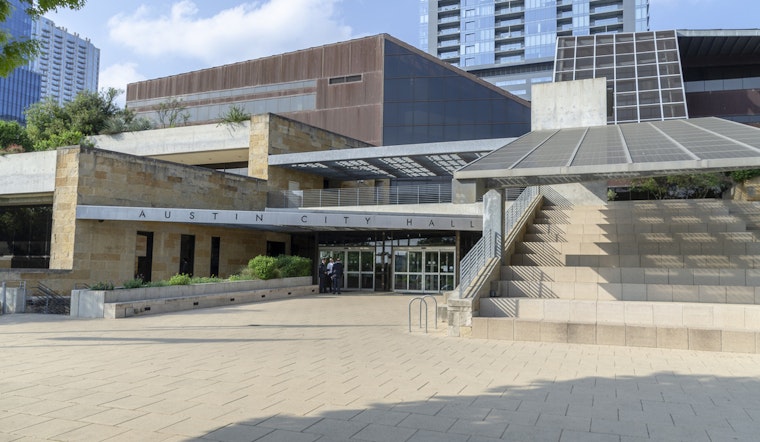
Just months after the City Council adopted the Fiscal Year 2026 Budget, Austin officials have been compelled to pivot following the voters' rejection of Proposition Q, a tax rate increase that would've generated an additional $110 million in revenue. The decision came after Austinites voiced their opinions through multiple channels, shaping the budget's formation since its inception in August 2025. Despite the veto from voters, the City is not facing a $110 million deficit, as efficiencies and spending cuts have been identified to bridge the financial gap without derailing essential services, according to a statement on the City of Austin's website.
The City was ready to mull over the amended budget in today's special meeting, but an undisclosed complaint regarding the posted documents foiled these plans, though the City maintains the meeting was posted both correctly and appropriately. A hope for undistorted transparency led to the cancellation, with officials taking extra measures to communicate the adjusted Fiscal Year 26 Budget timeline to constituents. Details and dates for these forthcoming sessions, including work sessions, public hearings, and possible special-called meetings, span from November 18th through November 24th, as detailed on the City of Austin's website.
According to the updated agenda, the City Council work session and budget briefing on November 18 will kick things off, followed by a public hearing on November 19, where Austinites can directly voice their concerns and ideas regarding the updated fiscal plan. The council is set to deliberate and potentially approve the Proposed FY26 Amended Budget on November 20. However, additional special-called meetings have been penciled in for November 21 and 24, just in case further deliberation is needed.
Notably, the City is facilitating civic participation by enabling online and in-person speaker registration before these events – each session having designated times when Austinites can sign up. While this commitment to public engagement remains clear, it seems the path to the amended budget adoption, marred by process mishaps and the subsequent scramble to adapt to a new financial reality post-Proposition Q, is proving more complex than originally anticipated. Details about the registration process and session times are readily available on the City's official announcement, guiding those interested to engage directly in the democratic process that will shape Austin's financial future.



