

























































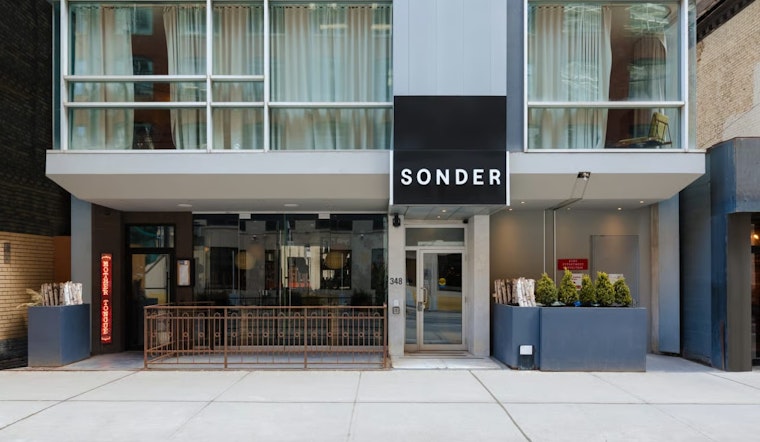
A decade-long dream to revolutionize hospitality has come to an abrupt and devastating end. San Francisco-based Sonder Holdings announced Monday it will immediately wind down operations and file for Chapter 7 bankruptcy liquidation, bringing a swift conclusion to what was once a billion-dollar startup success story.
The collapse came just one day after Marriott International terminated its licensing agreement with Sonder, citing the company's default. For Sonder, the Marriott partnership had been positioned as a lifeline—a last-ditch effort to stabilize the bleeding cash and turn around years of losses. Instead, it became the final blow.
"We are devastated to reach a point where a liquidation is the only viable path forward," said Janice Sears, Sonder's interim CEO, in a statement. According to the company, "prolonged challenges in the integration" of Sonder's technology with Marriott's systems resulted in "significant, unanticipated integration costs" and a "sharp decline in revenue."
From College Dorm Room to Billion-Dollar Valuation
The story of Sonder is one of meteoric rise and spectacular failure. What began in 2012 as an experiment by McGill University student Francis Davidson—renting out his college apartment to earn extra cash—evolved into a tech-driven hospitality company that raised over $500 million and operated 9,000 units across 40 cities in nine countries, as detailed by Wikipedia.
Davidson and co-founder Lucas Pellan moved their headquarters from Montreal to San Francisco in 2016, chasing Silicon Valley's talent pool and venture capital riches. According to CNBC, by 2019 the company had reached a $1 billion valuation and was approaching $400 million in annual revenue.
Sonder's pitch was compelling: design-forward apartments with hotel-like service, accessible through a mobile app that promised seamless check-in and 24/7 support. The company positioned itself as a middle ground between sterile hotels and unpredictable Airbnb rentals, offering consistency without the corporate feel.
The SPAC Trap
Like many pandemic-era tech darlings, Sonder went public in January 2022 through a special purpose acquisition company (SPAC) merger, initially valued at nearly $2 billion. But that decision now looks like a fatal miscalculation. According to Fast Company, Sonder is "the latest bankruptcy victim that stems from the frenzy of special purpose acquisition company deals that began about five years ago."
The SPAC boom of 2020-2021 produced a graveyard of failed companies. According to Inc., data from financial analytics firm Debtwire shows that 40 former SPACs have filed for bankruptcy since 2022—including WeWork, 23andMe, Virgin Orbit, Bird, Nikola, and Lordstown Motors.
Sonder never turned a profit. The company's stock, which briefly traded above $4 in early 2024, plummeted to just 20 cents by Monday afternoon—a staggering 94% decline for the year, according to Yahoo Finance.
A Local Connection Soured
San Francisco residents may remember Sonder's controversial arrival in the neighborhood. In 2019, the company leased all 52 market-rate units in a new building at 2112 Market Street at Church, drawing fierce criticism from housing advocates who argued the move exploited a city loophole to convert new permanent housing into furnished short-term rentals.
Then came the pandemic. In July 2020, Sonder sued to terminate its lease on the Church & Market building, claiming COVID-19 restrictions had created a "material adverse effect" on its business. Developer Brian Spiers told reporters at the time that Sonder had stopped paying rent while continuing to collect from its subtenants—a pattern that would haunt the company's later financial troubles.
The Marriott Gambit
By mid-2024, Sonder was fighting for survival. The company faced securities fraud class-action lawsuits, reported "substantial doubt" about its ability to continue as a going concern, and was on the verge of Nasdaq delisting after its stock traded below $1 for 30 consecutive days, according to Skift.
In June 2025, founder Francis Davidson stepped down as CEO after orchestrating what he called "the hardest thing" he'd ever done: a 20-year strategic licensing agreement with Marriott that was supposed to add Sonder's 9,000+ units to the Marriott Bonvoy platform. According to BetaKit, the deal came with $146 million in additional liquidity from investors.
Janice Sears, a veteran real estate banker who had served on Sonder's board since 2021, took over as interim CEO. Sears brought decades of experience from Bank of America Securities, where she had led the Western Region's Real Estate, Gaming & Lodging Investment Banking Group and served as San Francisco Market President.
But the Marriott integration proved disastrous. According to Skift, technology integration challenges and delayed bookings led to a revenue collapse. Sonder's second-quarter 2025 results showed an 11% year-over-year drop in revenue to $147 million and a net loss of $44.5 million—more than triple the prior year.
The Sunday Night Breakup
On Sunday, November 9, Marriott made the highly unusual move of announcing—on a weekend—that it had terminated its licensing agreement with Sonder "due to Sonder's default," according to the company. The decision removed approximately 7,700 rooms across 140 properties from Marriott's booking channels.
Guests staying at Sonder properties received emails Sunday night informing them their stays would end immediately and instructing them to vacate "as soon as possible," according to Skift. Many travelers were left scrambling to find alternative accommodations with no advance notice.
Less than 24 hours later, Sonder announced its immediate shutdown. The company said it had "made comprehensive efforts" to find buyers or additional financing, engaging "numerous strategic and financial parties," but was unable to execute a viable transaction, according to The Real Deal.
What Went Wrong
Industry analysts point to multiple factors that doomed Sonder. The business model required massive upfront capital for leasing properties, renovating units, and maintaining technology infrastructure—all while competing in the notoriously low-margin hospitality sector.
Unlike traditional hotels that own their real estate or pure marketplace platforms like Airbnb that simply connect guests with hosts, Sonder operated in an uncomfortable middle ground. The company leased properties but didn't own them, took on inventory risk that marketplace platforms avoided, yet lacked the economies of scale that traditional hotel chains enjoyed.
The Marriott integration was supposed to solve the distribution problem by giving Sonder access to millions of Marriott Bonvoy members. Instead, according to Bisnow, "challenges aligning the companies' technology frameworks" resulted in significant costs and revenue decline.
Some market observers were skeptical from the start. As one podcast host noted, "If you're going to test the waters, you don't sign a twenty-year deal. This was supposed to be a try-before-you-buy structure, but it ended in less than a year."
The SPAC Graveyard Grows
Sonder's demise adds another cautionary tale to the growing list of SPAC failures. According to Bloomberg, companies that went public through SPAC mergers during the pandemic boom have struggled with unrealistic projections, insufficient due diligence, and misaligned incentives between sponsors and long-term shareholders.
The broader SPAC market has collapsed since its 2021 peak, when 621 SPACs went public raising $162 billion. By 2023, according to Woodruff Sawyer, 21 SPAC-related companies filed for bankruptcy, with WeWork being the highest-profile casualty. In 2025, genetic testing company 23andMe joined the club, filing for Chapter 11 after its value plummeted from a $6 billion peak to less than $25 million.
What's Next
Sonder expects to file Chapter 7 liquidation proceedings in U.S. Bankruptcy Court for Delaware, meaning the company will cease operations rather than attempt to reorganize. A court-appointed trustee will oversee the sale of Sonder's assets to pay creditors. The company also plans to initiate insolvency proceedings in the international countries where it operates.
For Sonder's approximately 1,200 employees, the shutdown means immediate job losses. For guests with future reservations, those bookings are canceled. For property owners who leased to Sonder, the sudden closure likely means scrambling to find new tenants or convert units back to traditional long-term rentals.
The Church & Market building in San Francisco, where Sonder's presence sparked neighborhood controversy five years ago, may ironically return to its originally intended purpose: permanent housing for San Francisco residents.
In her statement, Sears expressed gratitude to employees "for their longstanding dedication to putting the guest experience at the center of everything we do." She added, "Sonder spent the last decade redefining hospitality with remarkable and accessible guest stay experiences."
That decade-long journey—from college apartment hustle to billion-dollar unicorn to penny stock collapse—took just 13 years. It's a timeline that perfectly captures both the promise and peril of Silicon Valley's startup culture, where audacious ambition meets harsh economic reality.





