

























































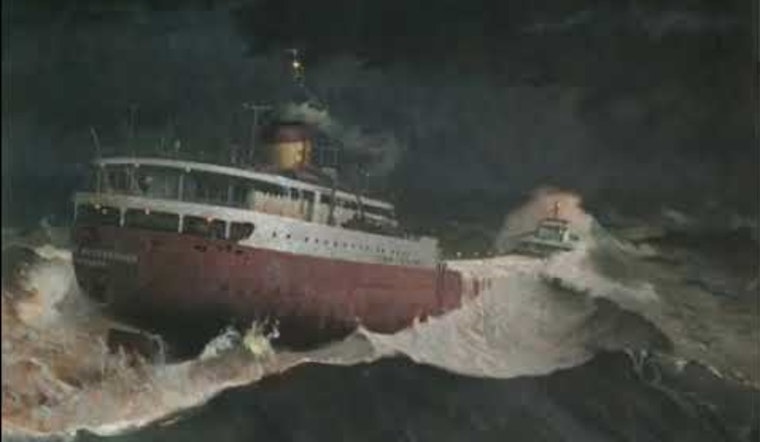
Marking half a century since the sinking of the S.S. Edmund Fitzgerald, the Butler County Sheriff's Office reflected on the tragedy that claimed 29 lives in the icy waters of Lake Superior. On November 10, 1975, the vessel, then the largest carrier on the Great Lakes, succumbed to a violent storm, its demise etched into history through Gordon Lightfoot's ballad "The Wreck of the Edmund Fitzgerald".
Originally launched in 1958 and celebrating several maritime feats, including being the first ship to carry over one million tons of ore through the Soo Locks, the Fitzgerald met its harrowing end after departing Superior, WI, on November 9, 1975, fated for a course that was abruptly altered by a storm warning from the National Weather Service. According to the Butler County Sheriff's Office, the Fitzgerald, in contact with the Arthur M. Anderson, its companion on the waters, opted for a safer northern route along the Canadian coast but to no avail, as it was thrashed by waves up to 16 feet high and winds that reached 42 knots.
The final hours of the Fitzgerald are a flurry of failed communications and crippling damage, with its last transmission indicating a severe list and the loss of radar capabilities. It seemed a battle against the storm's rage with waves breaking over the deck and winds howling past. No distress signals were sent, which might suggest the crew was unaware of the fatal threat, at least not until the waves claimed the great ship, as discussed in a post commemorating the vessel by the Butler County Sheriff's Office.
The investigation that followed the sinking could not definitively conclude the cause, though theories point toward damage from the relentless storm, which led to the craft taking on water. Subsequently, the Fitzgerald may have nosedived into a rogue wave, sealing its fate, an aftermath detailed by the Butler County Sheriff's Office. The wreck of the Fitzgerald was not confirmed until the following spring, and in 1995, its bell, engraved with the names of those who were lost, was brought to the surface; it is now part of the annual bell-ringing ceremony at Michigan's Great Lakes Shipwreck Museum, a ritual serving as a poignant reminder of the lake's treacherous beauty and the men who perished beneath its waves.




