

























































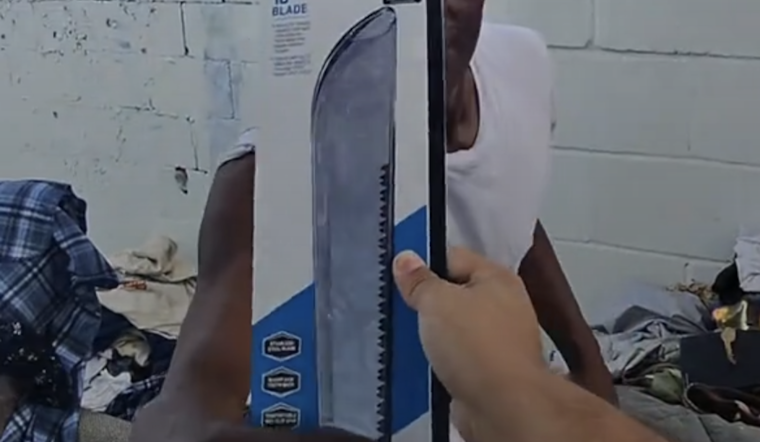
A Chicago TikToker posted a video this week handing brand-new machetes to people living on the street, including individuals in wheelchairs, and the clip has prompted alarm online. The footage shows recipients accepting the boxed blades without hesitation, and viewers have taken to social platforms to question whether the stunt crosses legal or ethical lines. The creator’s casual framing of the giveaway has stirred up debate about social media attention seeking in a city already locked in on public safety concerns.
@povwolfy Keeping the homeless in the streets safe 💯 🙏
♬ original sound - Wolfy
The clip was posted on TikTok by user @povwolfy and carries a caption the creator styled as a joke about “keeping the homeless in the streets safe.”
The Nerd Stash reports that a thread on Reddit amplified the clip and many commenters argued the stunt “has to be illegal,” saying it looked like supplying a dangerous weapon to vulnerable people. The online discussion collected dozens of reactions that debated whether the creator’s intent was malicious or simply an ill-considered bid for views. Those conversations show how quickly a single clip can become a broader argument about safety, exploitation and platform responsibility.
What the Clip Shows
In the recording, the creator unwraps several sealed machetes and walks a Chicago block handing them to people standing or sitting on the sidewalk, including a woman and at least one person in a wheelchair. One of the last recipients in the clip inspects the blade and appears comfortable holding it, a moment that unsettled many viewers. The Nerd Stash account of the footage emphasizes that none of the offered machetes were refused in the short clip.
Legal Questions
The Illinois Criminal Code lays out offenses for unlawful possession of weapons and related aggravated charges, and those statutes frame the basic legal questions raised by the video. According to the Illinois General Assembly’s statutory text (720 ILCS 5/24-1), the law treats a range of knives and similar implements as weapons and specifies circumstances in which possession and carrying are unlawful. Whether the filmed giveaway would draw criminal charges would depend on facts prosecutors could prove, including where the transfer occurred, who received the blade, and whether the supplier intended to facilitate unlawful use.
The broader doctrine of accomplice or secondary liability complicates things further. The Legal Information Institute at Cornell Law School explains that a person who knowingly assists, encourages or facilitates another’s crime can sometimes be held criminally responsible as an aider or abettor, but that liability typically requires proof of intentional assistance rather than mere negligence. In short, handing someone a tool that is later used unlawfully could become part of a criminal case if prosecutors can link the supplier’s conduct and intent to the subsequent offense, while more routine or ambiguous conduct is less likely to support accomplice charges.
Why It Matters in Chicago
The stunt landed in a city already familiar with violent incidents involving large blades, which is part of why commenters and neighbors reacted strongly. Local reporting has documented machete-involved attacks and recoveries in Chicago in recent years, underscoring public safety concerns when edged tools circulate on busy sidewalks. For example, Fox 32 Chicago has covered cases in which police recovered machetes at violent scenes.
The video has reopened familiar debates about whether stunts that put clicks ahead of public safety should be policed by platforms, deterred by prosecutors or checked by community response. At minimum, it has drawn fresh attention to the risks creators can create when shock value replaces judgment, and to the vulnerability of people living on the street who are thrust into content made for strangers’ entertainment. This article will be updated if local authorities announce an investigation or the TikToker responds to requests for comment.





