

























































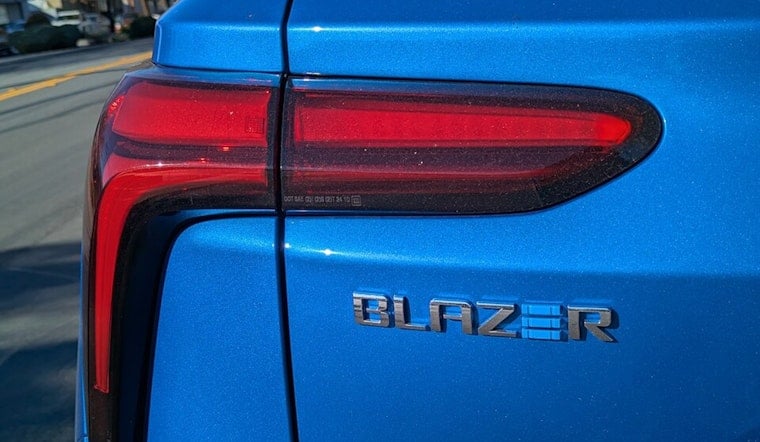
Chula Vista’s police department has quietly plugged into the electric era, adding 10 all-electric Chevrolet Blazer EVs to its fleet in a roughly $960,000 purchase paid for with the city’s public-safety sales tax. The new SUVs are primarily headed to school resource officers, with one set aside for traffic enforcement, while the department holds off on using them for 24-hour patrol until it can assess how the vehicles perform in real-world conditions, including range and charging. Officials are treating the move as a pilot to track maintenance costs, emissions, and charging needs before deciding whether to go bigger.
According to The San Diego Union-Tribune, the department purchased the Blazers through a city bidding process from Bob Stall Chevrolet at approximately $66,000 per vehicle. Outfitting each SUV with lights, radios, and other police equipment costs roughly $30,000. By comparison, a fully equipped conventional gas patrol car typically comes in around $88,000. The Union‑Tribune also reports that Chula Vista runs a fleet of roughly 210 vehicles total, including about 100 marked patrol units, and that these 10 Blazers are believed to be the first EVs used as squad cars anywhere in San Diego County.
What the Blazers Are Built To Do
The new SUVs include the Blazer EV PPV, Chevrolet’s purpose-built police pursuit vehicle, which GM bills as the only pursuit-rated police-package EV in its segment. As outlined by GM Envolve, the PPV setup delivers an estimated 286 miles of range with Dual-Motor all-wheel drive and a projected top speed of nearly 130 mph, featuring a large Ultium battery designed to handle the power draw from police electronics. The package features heavy-duty brakes, steel wheels, and fleet-calibrated electronics designed to withstand patrol demands.
Money And Tradeoffs
Once the emergency lights, radios, and other equipment are bolted on, the EVs’ sticker price creeps a bit higher than some gas cruisers. City staff, though, point out that the real math includes fuel costs, long idling times, emissions, and long-term maintenance. The money behind the purchase comes from Measure A, the half-cent sales tax that Chula Vista voters approved in 2018 to fund public safety spending and provide oversight of how that cash is used.
Maintenance And Local Air
Sgt. Anthony Molina told the San Diego Union-Tribune that police leaders expect most major maintenance on the Blazers to be wear-and-tear items, such as tires and brakes, rather than engine work. As detailed by Chevrolet, Blazer EV models feature regenerative braking and one-pedal driving modes that can feed energy back to the battery and reduce the use of the mechanical brakes. The department has also noted that EVs have no tailpipe emissions while idling, a potential local air-quality win around schools and busy corridors where police vehicles often sit running.
Where They’ll Be Used And What’s Next
Nine of the Blazer EVs are assigned to school resource officers, and the tenth is slated for a traffic officer while the department gauges how the vehicles perform on those shifts. The pilot is expected to inform future decisions about charging infrastructure, officer training, and whether to electrify a larger portion of the approximately 210-vehicle fleet. The move lines up with a broader trend of police agencies around the country testing electric patrol models and pursuit-rated EV packages, as tracked by fleet analysts and industry outlets.
For now, city officials describe the purchase as a cautious test run. They plan to watch range, charging patterns, and total maintenance costs through the school year before deciding whether to add more EVs to regular patrol. If the Blazer EVs hold up under duty, Chula Vista could become one of the county’s early examples of how municipal fleets make the jump to electric power.



_-_badge_closeup.jpg)