

























































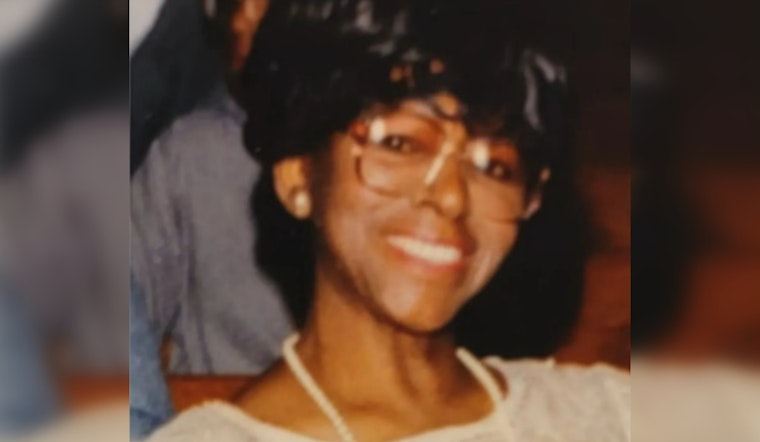
The mystery of a body discovered in 1988 along the shores of Lake Michigan has finally been resolved. Nearly four decades after her disappearance, the remains have been identified as those of Dorothy Glanton, a missing woman from Chicago. This breakthrough came after Michigan State Police joined forces with the DNA Doe Project, an initiative aiming to solve Jane and John Doe cases through genetic genealogy.
Glanton, who was 71 at the time of her disappearance on Dec. 9, 1987, was the subject of an extensive search. Her body was recovered on April 8, 1988, near New Buffalo, Michigan, but initial assumptions, detailed in a WGN-TV article, incorrectly aged her as a white woman possibly in her 40s or 50s. It wasn't until the DNA Doe Project took on her case that it was determined she was, in fact, a Black woman in her 70s.
This identification process began in earnest in 2023 when, according to a FOX 32 Chicago report, the DNA Doe Project constructed a genetic profile that led to the creation of a family tree. The investigators were initially looking for what they thought might be Dorothy's daughter, as stated by team leader Lisa Needler, "At first, we thought we were looking for a daughter of Dorothy, based on the expected age of the deceased."
The poignant discovery made amidst their research found an old newspaper ad from August 1988—when family members made a desperate plea for Glanton's return, unaware that she had already passed. "It said, ‘your mother is ill, lonely & afraid’ and ‘she needs you desperately’," Robin Espensen, a co-team leader of the project, shared as per FOX 32 Chicago's interview. Despite the breakthrough in identification, the details surrounding Glanton's death remain unclear.
Sgt. John Moore of the Michigan State Police Niles Post, who led the reopened investigation, underscored the impact of this resolution, saying in a WGN-TV interview, "This identification brings closure to a family that has wondered for nearly four decades what happened to their loved one." He also expressed gratitude for the dedication of everyone involved in the investigation—a collaborative effort that spanned many years and harnessed the power of modern genetic genealogy to bring long-awaited answers to a grieving family.





