

























































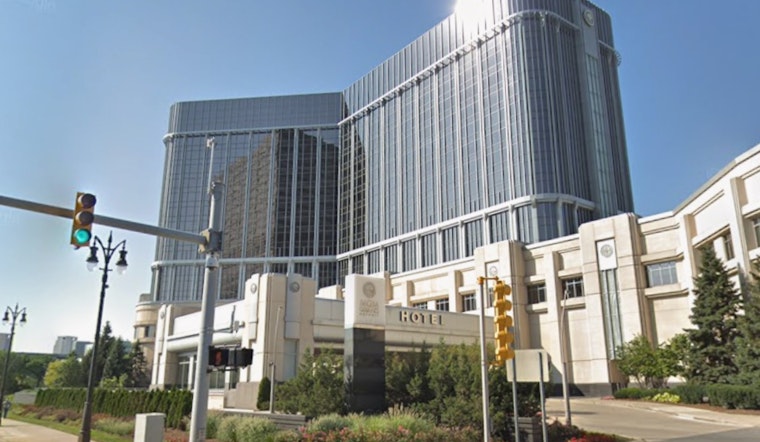
Revenue reports are in for Detroit's casino scene, showing a notable uptick in October this year. Figures released by the Michigan Gaming Control Board indicate a combined $107.4 million in revenue generated by MGM Grand Detroit, MotorCity Casino, and Hollywood Casino at Greektown. The bulk of this sum, precisely $105.9 million, came from the traditional bastions of casino earnings: table games and slot machines. On the other hand, retail sports betting chipped in a smaller portion, amounting to $1.5 million. According to the MGCB, MGM Grand led the revenue pack with a dominant 49% market share, while MotorCity followed at 29%, and Hollywood Casino trailed with 22%.
In a year-over-year comparison, aggregate revenue from table games and slots has seen a growth of 2.2% from October 2024, alongside a monthly rise of 7.9% from September 2025. Yet, zooming out to the year-to-date, from January up through October, there's a slight 1.1% dip when compared with the same period last year. Looking at the individual performances, MGM Grand Detroit posted a 6.6% rise to $52.7 million, flipping the script, MotorCity Casino's revenue saw a decrease, down 3.8% to $30.5 million, and Hollywood Casino at Greektown showed a marginal uptick of 0.8%, reporting $22.7 million.
The state coffers benefited from these gaming activities as well; October witnessed the casinos paying a total of $8.6 million in state gaming taxes, slightly more than the $8.4 million contributed in the same month the previous year. Detroit's city budget was also bolstered, with casinos turning in $13.1 million in wagering taxes and development agreement payments.
Retail sports betting wasn't left behind in contributing to the revenue stream, reporting $13.5 million in the total handle for October. Gross receipts hit the $1.6 million mark, and from this, the qualified adjusted gross receipts (QAGR) leaped forward. MGM Grand Detroit found itself on the lower end of the QAGR spectrum at $27,258, whereas MotorCity Casino raked in a handsome $786,929, and Hollywood Casino at Greektown was no slouch either, collecting $727,254. "The casinos paid $58,266 in state taxes from retail sports betting revenue and submitted $71,215 in wagering taxes to the City of Detroit," the Michigan Gaming Control Board reports.
Additionally, it's worth noting a related sector's performance—fantasy contests. September's figures for fantasy contests revealed $986,178 in adjusted revenues and saw the operators paying out $82,839 in taxes. With the burgeoning inclination toward digital gaming platforms, the impact of such services on the state's overall gaming revenue continues to merit attention.





