

























































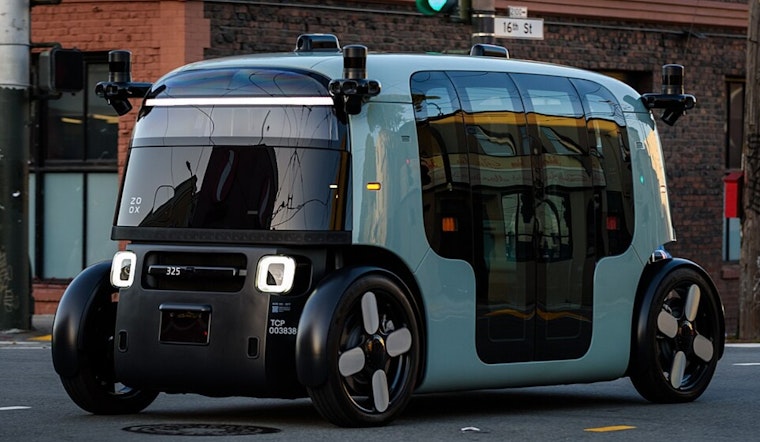
Zoox is launching its purpose-built robotaxi service to members of its public waitlist in San Francisco, inviting these early "Zoox Explorers" to ride for free in select parts of the city as the company gradually scales up. The Amazon-owned startup is starting with a limited, point-to-point program that covers much of SoMa, the Mission, and the Design District while it gathers feedback and trains its systems. For now, the trips stay free because the vehicles are operating under demonstration permissions while Zoox grows its fleet.
How the early-rider invites will work
As reported by CNET, Zoox will pull people off its waitlist based on factors such as where they live or travel and how many additional robotaxis it has deployed, then invite those users into the Zoox Explorers program. Those early riders will receive free trips initially, allowing the company to collect feedback on routes and the overall passenger experience. Earlier SoMa tests and a gradual rollout have already given Zoox a head start on understanding how its vehicles behave in the neighborhood, according to Hoodline.
Where you will be able to go
The Verge maps Zoox’s initial San Francisco service area to most of SoMa, the Mission, and the Design District, and notes that riders will be able to enter an address, drop a pin, or choose from suggested points of interest. Unlike the fixed pickup zones Zoox used in its Las Vegas pilot, the San Francisco deployment focuses on point-to-point trips, and the company says it will expand invitations as more vehicles arrive. According to the reporting, Zoox currently operates roughly 50 robotaxis across Las Vegas and San Francisco.
What the robotaxi is like
Zoox’s toaster-shaped robotaxis are symmetrical and bidirectional and do not have a steering wheel, pedals, or a traditional driver’s seat, a purpose-built design that Reuters notes required regulatory exemptions for demonstration use. Inside, passengers sit facing one another in a salon-style cabin. The vehicles rely on a sensor suite that includes lidar, radar, and cameras, as described by CNET. Zoox has been testing autonomous systems in the Bay Area for years as it worked toward this kind of public rollout.
Built nearby: the Hayward plant
The manufacturing side is also scaling up. TechCrunch reported that Zoox’s 220,000-square-foot Hayward facility can eventually assemble about 10,000 robotaxis per year at full capacity. The plant will handle integration, final assembly, and testing as Zoox shifts from a few dozen test cars to a larger operational fleet. Executives say ramping up production is a prerequisite for expanding public access beyond the current, tightly defined early-rider zones.
Regulation and safety
Federal and state approvals are still in the driver’s seat. The rides are being offered as demonstrations for now, and Zoox must get permission from California regulators before it can charge fares, according to AP News. The company previously sought and received exemptions tied to its purpose-built design, and earlier testing rounds have included software updates and recall actions, making regulator sign-off a key watchpoint for any expansion. That keeps the rollout on a cautious, staged path while Zoox collects operational data and rider feedback.
How to try one
Curious riders can join the waitlist through the Zoox app and the company’s website. Zoox’s homepage and "Where to Ride" pages link to the App Store and Google Play for the app and list San Francisco among current locations. Once invited, riders can hail trips inside the app and may receive walking directions to designated pickup spots within the service area. Zoox says feedback from these early riders will be used to fine-tune navigation, pickup locations, and the overall passenger flow before a wider rollout.
Why this matters for San Francisco
The rollout gives San Franciscans another real-world test of driverless, purpose-built robotaxis. It raises fresh questions about how autonomous vehicles fit into dense city streets already crowded with transit, bicycles, and heavy pedestrian traffic. It also tightens the race with long-established services such as Waymo, putting extra pressure on regulators and operators to balance safety, traffic impacts, and rider demand as the technology scales.





.jpg)