

























































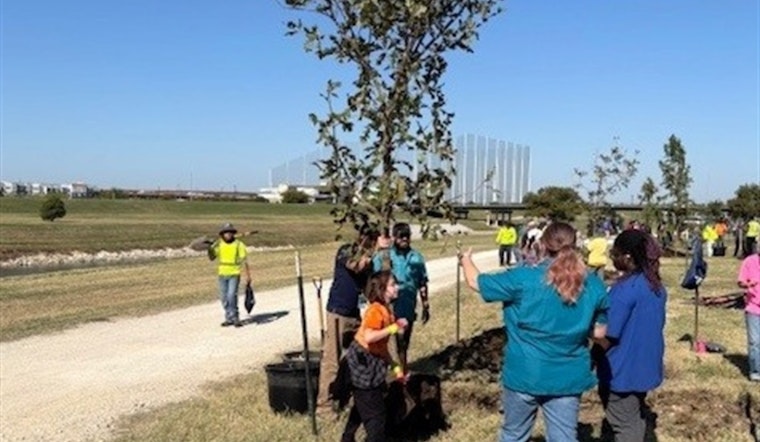
Fort Worth residents put their love for green spaces on display as they gathered to celebrate Texas Arbor Day, a tradition the city takes seriously with its rich history of preserving urban forestry practices. Recognizing the day last Friday, the Fort Worth Park & Recreation, teamed up with community partners to plant a new generation of trees in the city. The event, part of the city's longstanding commitment to environmental stewardship, saw the participation of volunteers who got their hands dirty planting dozens of young trees, as reported by the City of Fort Worth.
Not just a one-time affair, Fort Worth has a legacy of being a green oasis, established as far back as 1873 when the city charter made it illegal to hitch a horse to a tree. Continuing this verdant tradition, Fort Worth has been recognized as Tree City USA, an honor reflecting its dedication to effective urban forest management. According to the City of Fort Worth, Fort Worth takes pride in being Texas's oldest and longest-running Tree City USA since 1978, evidencing a persistent push for maintaining and expanding its urban canopy.
Elevating the quality of life around the Trinity River was another focal point during the Arbor Day celebrations, with the Tarrant Regional Water District (TRWD) responding to community calls for more shade along the trails. Over 20 trees found new homes along the Fourth Street Trailhead, and an additional 25-plus trees are set to be planted, come November 14, in Clearfork's River Park Trailhead. Paris Sanchez, TRWD's landscape architect manager, conveyed in a statement, per the City of Fort Worth, "A lot of public outreach and involvement went into the plan. We asked what people wanted in their local recreation system, and overwhelmingly we heard their desire for more shade along the Trinity Trails."
The considerations for native and adapted species, such as red oak, live oak, and bald cypress, reflect a thoughtful approach to ensure that the plantings thrive in the Texas climate. These trees, planted at a starting range of 12-25 feet tall, are deemed the ideal size to secure growth for the years ahead, and with TRWD's commitment to provide irrigation for the first two years, it seems these saplings are set for a healthy start. In a move to safeguard the structural integrity of local levee systems, these trees will be planted at safe distances to accommodate their eventual root and canopy expansion.





