

























































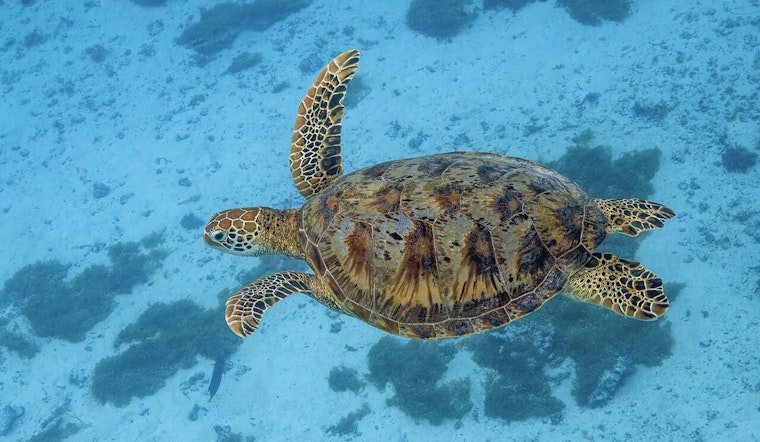
The honu — Hawai‘i’s green sea turtle — has come back in a way even long‑time biologists find striking, and that rebound has reopened a debate that’s been simmering for decades: should Native Hawaiians be allowed to resume traditional, noncommercial turtle harvests now that global assessments show big population gains? Advocates argue limited ceremonial takes would restore cultural practices and help some families; federal and international protections, however, still block any return to hunting as it was practiced in the past. The question is moving quickly from community meetings to federal rulebooks and treaty talks.
IUCN’s global reassessment
The International Union for Conservation of Nature recently moved the green sea turtle to Least Concern in its latest Red List update, citing decades of nesting‑beach protections, bycatch measures and community programs that have boosted many subpopulations. According to IUCN, the update recognizes widespread gains while warning that climate change, coastal development and local threats still imperil some nesting sites.
U.S. protections remain in place
Even with that global shift, U.S. law treats Hawai‘i’s honu as a distinct management problem: green turtles were first protected under the Endangered Species Act in 1978 and in 2016 federal agencies divided the species into multiple distinct population segments for ESA purposes. The U.S. Fish and Wildlife Service explains that the Central North Pacific (Hawaiian) DPS is managed to protect nesting and basking habitat, and that any change to federal protections would require formal agency review and rulemaking.
Voices from the islands
On Moloka‘i and elsewhere, cultural practitioners say federal protections have long criminalized practices that once fed families and cemented community ties. Mac Poepoe told Civil Beat that the ban “criminalizes us,” while retired federal biologist George Balazs told the same outlet there are “ample turtles in Hawai‘i” that could be used for careful, traditional purposes. The Civil Beat report also notes long‑term nesting counts and a 2019 estimate that brought some Hawai‘i nesting groups close to pre‑exploitation levels, a key piece of the recovery argument.
Legal and international hurdles
Promises of a cultural exemption collide with binding international and domestic rules. The Inter‑American Convention obliges parties to prohibit deliberate take of turtles except in narrow, regulated circumstances, a framework described by NOAA Fisheries. And, as reported by Civil Beat, Western Pacific Regional Fishery Management Council Executive Director Kitty Simonds recently asked NOAA Fisheries Assistant Administrator Eugenio Piñeiro Soler to “explore changes” to how treaty obligations are implemented so cultural takes could be considered under strict limits.
Who will decide — and how fast?
Any change would require federal action through NOAA Fisheries and possibly U.S. Fish and Wildlife Service rulemaking, a technical process that can take months or years. NOAA Fisheries appointed Eugenio Piñeiro Soler as Assistant Administrator in April 2025, but the department’s capacity to process petitions and consultations is at least temporarily constrained while many fisheries staff remain furloughed during the federal government shutdown. Those staffing and procedural realities could slow any near‑term policy shift.
What community‑based management might look like
Supporters of a limited cultural harvest envision tightly controlled programs: community quotas tied to nesting statistics, mandatory reporting, seasons that avoid nesting, and a clear ban on commercial sales. State managers and community groups emphasize monitoring and bycatch reduction as preconditions for any take. The Hawaiʻi Department of Land and Natural Resources continues to enforce state protections and notes that climate‑driven beach loss and human disturbance remain major, ongoing risks.
Bottom line: the IUCN’s global decision has reopened a deeply local conversation about culture, food and stewardship, but turning that technical reclassification into a narrow, lawful cultural exception will require navigating domestic law, international treaty obligations and heated public debate — plus the slow machinery of federal rulemaking.





_Moorea.jpg)