

























































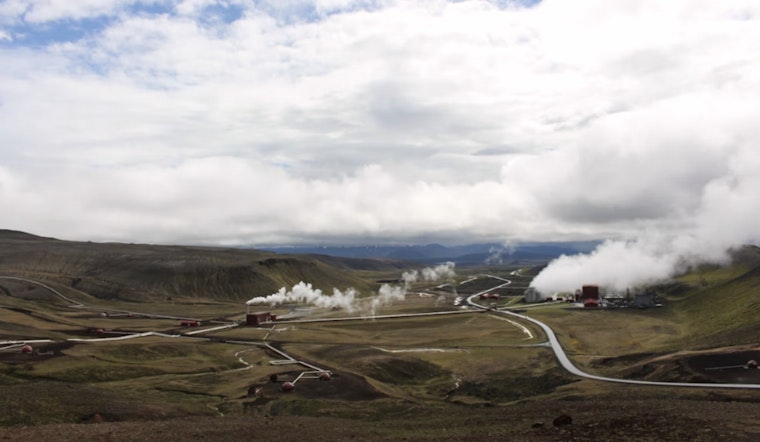
A quiet patch of Humboldt County desert may be sitting on one of Nevada’s next big power players. A geothermal well drilled at the Pumpernickel site came in hotter and more permeable than explorers expected, and both state and company officials say the results could turn the area into one of the state’s largest geothermal power sites within a few years. The deep test hit significant temperatures at relatively shallow depths and encountered flow characteristics that point to a producible reservoir. If development moves ahead, the project could feed steady, 24/7 renewable energy into the regional grid and bring new work to nearby communities.
In a company release, Zanskar said drilling at Pumpernickel confirmed both reservoir temperature and permeability and that the site will move into full power development, with an initial phase expected to deliver electricity within three years. The announcement was reported locally by Vegas Inc, which quoted Nevada Division of Minerals fluid‑minerals manager Dustin Holcomb saying the Pumpernickel area was briefly explored decades ago, then largely ignored until old data were dusted off and re‑examined. Both company and state voices emphasize that the discovery is still early stage, and that more testing and a full slate of permits are required before any plant rises from the sagebrush.
AI Targeting And Rapid Testing
Zanskar says this find was no lucky poke in the dark. The firm used artificial intelligence and advanced geoscience modeling to prioritize targets and run a faster, lower cost discovery campaign. “Our team’s ability to execute with these AI tools and precision drilling is unparalleled,” company leadership wrote in its announcement, adding that its “AI‑native” approach helped flag a conventional geothermal system in a place where surface clues are limited, according to Zanskar.
What The Drill Showed
Industry reporting says the exploratory well encountered about 137°C, roughly 280°F, at around 760 meters, about 2,500 feet, and ran into multiple loss and artesian flow zones. Those are the kind of subsurface signals that point to both heat and permeability, the basic ingredients for a geothermal production well, according to ThinkGeoEnergy. Based on those early numbers, analysts suggest the field could support an initial Phase 1 development in the tens of megawatts range.
Nevada’s Geothermal Edge
Nevada is already one of the country’s geothermal workhorses, ranking just behind California for utility‑scale geothermal generation, according to the U.S. Energy Information Administration. Geologists and developers point to the state’s geology, including a thinner crust that brings higher temperatures closer to the surface, as a key advantage. That often means shallower, less expensive drilling compared with many other parts of the United States.
Local Impact And Footprint
Zanskar and state officials say geothermal plants typically have a relatively small surface footprint and can coexist with grazing and other land uses on the surrounding land. The company and local reporting put long term staffing at roughly 20 permanent jobs per operating site, with a larger wave of construction work when a plant is built. The company also says produced fluids would be reinjected to keep the system closed loop and carbon free, as reported by Vegas Inc. In other words, the hot water does its job, then goes right back underground.
Permits, Federal Push And The Timeline
Before any electrons flow from Pumpernickel, the project has to clear a stack of state and federal reviews. The Nevada Division of Minerals runs the state’s geothermal program and oversees permits and well integrity, according to the agency’s website. At the federal level, the Department of the Interior has adopted emergency procedures intended to accelerate geothermal permitting. Separately, the Bureau of Land Management held a large Nevada lease sale this fall that included parcels in Humboldt County. Officials say those steps could help speed projects, but they also add more regulatory checkpoints to clear.
What’s Next
Zanskar says it plans to move from this successful test into drilling full production and injection wells, then on to power‑plant construction. The company’s promise of first phase power within about three years still hinges on final reservoir testing, financing, grid interconnection and permits. Industry coverage notes that the data from Pumpernickel suggest a relatively quick path from discovery to development if everything lines up, but it also cautions that the leap from a hot test well to a grid‑connected plant is a multi step process, per ThinkGeoEnergy. For now, Pumpernickel sits in that familiar Nevada limbo: big promise in the ground, and a long regulatory road on the surface.





