

























































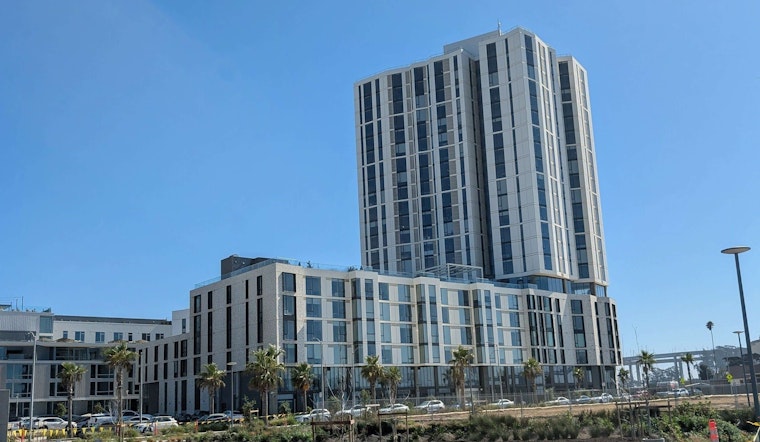
A man in his seventies—who chose not to give his name—told Hoodline San Francisco, "Never move here," adding, "It's very isolating, but maybe it could work for younger people. I just walk my dog around the building, and that's it."
On San Francisco’s Treasure Island, a once-sleepy former naval base is skewing young. Modular low-rise buildings, a ferry commute and below-market rooms have turned the outpost into something like a compact, waterfront village. New arrivals rave about the views and comparatively cheap rents, while longtime residents and planners warn the basics — grocery stores, schools, other daily staples — haven’t kept pace. The island’s master plan promises thousands more homes, parks and shops, but getting from landfill to a fully serviced neighborhood will take years.
How Many People And What’s Planned
According to the San Francisco Chronicle, Treasure Island’s median age is about 30 and roughly 61% of residents are between 18 and 44 — the highest share in the city. The Chronicle estimates roughly 2,800 people live on the island now and reports developers intend to add about 7,000 homes under a multibillion-dollar master plan that also envisions parks, retail and a marina.
Maceo May And Early Affordable Deliveries
The project’s first completed residential building was Maceo May, a six-story, all-electric modular complex dedicated to formerly homeless veterans that opened in spring 2023, city officials said. In a city press release the Mayor’s Office celebrated the opening, and the Chinatown Community Development Center — a co-developer — lists the 104 units and on-site services for residents.
Tolls, Transit And A One-Road Neighborhood
Because Treasure Island has a single major roadway on and off the island, the San Francisco County Transportation Authority has proposed a tolling and affordability program meant to discourage excessive car trips and pay for ferry, Muni and shuttle service. The authority’s Treasure Island transportation plan lays out proposed rates, exemptions for existing residents and a phased timeline for ferry and bridge milestones. Residents have pushed back at proposed one-way fees, saying tolls could make access to the city more expensive for people who rely on off-island services, local coverage found.
A Young Mix And Lingering Hardship
That youth boom sits alongside entrenched poverty: the Chronicle reports that roughly half of the neighborhood lives in poverty and that about 1,800 longtime residents remain on the former naval base. The paper also profiles newcomers and renters — one resident described paying roughly $625 a month for a room — a gap that helps explain both the island’s appeal to young people and the tensions between new and longtime neighbors.
Timeline, Cleanup And The Stakes Ahead
Planners and agency timelines show that much of the build-out will take place over the next decade, with transportation and infrastructure milestones stretching into the late 2020s and beyond, according to the SFCTA’s Treasure Island program and local project documents. The island also remains subject to ongoing Navy-led environmental cleanup overseen by state regulators, and the city maintains a public page explaining that remediation work and regulatory reviews will guide when parcels are cleared for development. That combination — infrastructure, cleanup and toll debates — means Treasure Island’s transformation will keep unfolding slowly, with both opportunity and uncertainty for people who already live there.





