

























































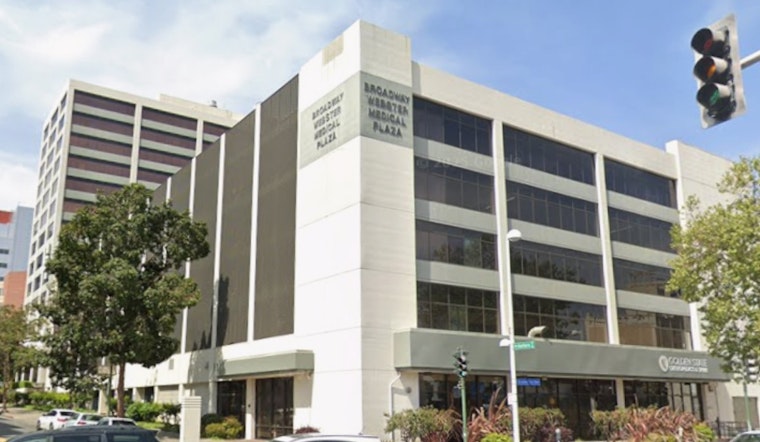
Oakland’s Broadway Medical Plaza, the three-story former Masonic hall at 3901–3903 Broadway, which has been remade into medical offices, has quietly changed hands via a deed rather than foreclosure, public filings show. Recorded on Monday, the handoff leaves about $32.5 million in unpaid debt and shifts control of the 60,000-plus-square-foot property to an affiliate of MidCap Financial. It’s another sign of the financial squeeze gripping East Bay commercial real estate.
Deed in lieu recorded with county
Filings with the Alameda County Recorder’s Office indicate the owner executed a deed in lieu on Nov. 10, transferring title to a lender affiliate, according to East Bay Times. The record lists the unpaid loan balance at approximately $32.5 million. It identifies an affiliate of MidCap Financial as the post-foreclosure owner, thereby terminating the joint venture that acquired the site in 2022.
From Masonic hall to medical plaza
The building was purchased in 2022 by a joint venture between Harrison Street Real Estate and Walnut Creek-based Meridian, with plans to convert the former Oakland Masonic Center into a medical office property. Meridian and Colliers announced a lease with the Center for Elders’ Independence (CEI) covering about 23,000 square feet, while marketing materials describe the project as roughly 60,000–61,300 square feet after redevelopment. Colliers and commercial listings outline the conversion and tenant activity.
Loan history and ownership gap
County records referenced in the reporting show that the property carried an original loan of approximately $35.2 million in 2022, while the buyers paid roughly $13.5 million for the site that same year. The mismatch between the acquisition price, redevelopment spend, and outstanding debt illustrates how a speculative conversion ended up underwater by the time of transfer, according to the East Bay Times.
Part of a wider pattern of distress
This isn’t an outlier. Industry reports and recent filings indicate that lenders and special servicers are taking back or seizing control of multiple East Bay properties, as offices and hotels face weak leasing and expensive refinancings. Comparable defaults and handbacks have been reported in recent months around Oakland and beyond. The Real Deal has documented similar loan troubles.
What comes next for tenants and the building
Now that a lender affiliate holds title, the property could be marketed for sale or held while servicers shop it, and listings still show big blocks of medical space available at the Broadway address. Tenants with active leases or those in mid-buildouts, such as CEI, typically continue under new ownership, although management duties and some terms may shift during a title transfer. Recorded filings don’t spell out the lender’s next steps. CommercialSearch displays suites at the address with availability that predates the deed filing.
Legal note
A deed instead of foreclosure allows a borrower to hand over title to the lender, thereby avoiding a formal foreclosure auction, essentially a paperwork truce if both sides agree. Investopedia explains the mechanics, and Alameda County’s Clerk-Recorder keeps the official record of transfers and encumbrances.





