

























































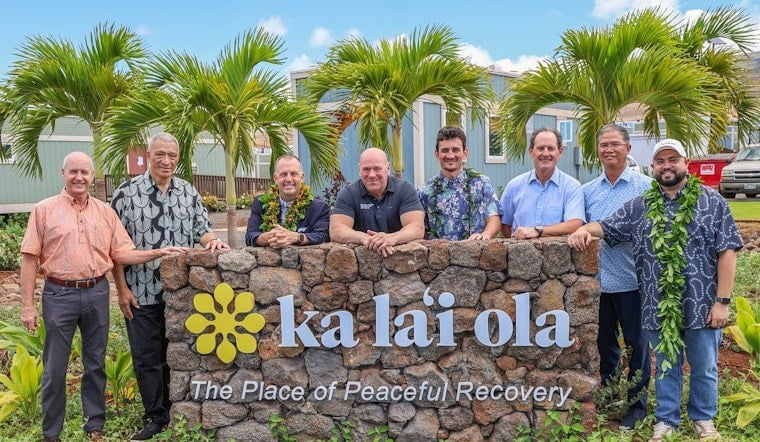
Gov. Josh Green’s administration yesterday spotlighted two major housing projects for Maui wildfire survivors: the newly completed Ka La‘i Ola village and the state’s first neighbor‑island kauhale, Kīpūola. Together they add hundreds of interim homes and supportive services to an island still rebuilding after the August 2023 fires. Officials framed the developments as a mix of rapid, temporary shelter and workforce and health programs to help survivors move toward stability. The announcement is the latest chapter in a recovery effort that has stretched into its third year.
Ka La‘i Ola: A 57‑acre interim village for survivors
Ka La‘i Ola is a 57‑acre interim housing community that includes roughly 450 modular homes and space for up to 1,500 people, with about 900 survivors already living on site, according to the Ka La‘i Ola project website. The site offers case management, a resiliency center, child care and on‑site health services to support families as they rebuild, as per HomeAid Hawai‘i. The village was built to serve people who did not qualify for FEMA direct housing and is intended to provide stability through 2029, after which state officials say infrastructure will be transferred to other agencies; reporting has noted the transfer to the Department of Hawaiian Home Lands as a key next step, as reported by Honolulu Civil Beat.
Kīpūola Kauhale brings a neighbor‑island prototype
Kīpūola Kauhale will provide 64 tiny homes grouped into four clusters with shared kitchens, showers and communal space, and will include a community center, laundry and a dog park, as noted by Maui Now. The site is listed at 82 Pūlehu Place in Kahului with an entry off Hāna Highway and is intended to serve both wildfire survivors and people experiencing homelessness, pairing housing with workforce development and on‑site services. HomeAid Hawai‘i, the developer, says the kauhale model emphasizes deep affordability and connects residents to job training and community operations.
How the state moved survivors fast
The administration says it launched what it calls the largest non‑congregate shelter program in U.S. history, partnering with hotels, the Red Cross and FEMA to place survivors in private rooms instead of mass shelters; within two weeks every survivor seeking shelter was relocated and roughly 80% were housed in hotels, as stated by the Office of the Governor. State leaders say hotel partnerships and rapid case management reduced stays in emergency congregate settings and bought time while interim communities were built. FEMA has continued to construct and manage other temporary communities on Maui and to coordinate rental assistance and direct housing programs with state agencies, per federal updates.
Who built it and what comes next
HomeAid Hawai‘i served as lead developer and worked with nonprofit partners including Family Life Center and Bridging the Gap, while state officials such as DHS deputy director Joseph Campos and DBEDT director Jimmy Tokioka coordinated housing and hotel partnerships, according to HomeAid Hawai‘i. Some reporting has questioned the cost of rapid construction — Honolulu Civil Beat estimated Ka La‘i Ola’s per‑unit footprint at roughly $411,000 — though backers argue the build offset months of hotel bills and helped end prolonged displacement for families. “The kauhale initiative has proven to be one of Hawai‘i’s most innovative and effective solutions to homelessness,” Gov. Josh Green said in a statement to the Office of the Governor.
What to watch next
Officials say interim housing will remain available for several years and that programs focus on helping people find permanent options before the temporary terms end; Gov. Green announced an extension of no‑rent policies for some survivors through June 2027. Advocates and housing experts say the projects’ long‑term success will hinge on jobs, transportation and an affordable housing pipeline that follows the interim period. State agencies say they will continue to monitor outcomes and coordinate with partners including the Hawai‘i Office of Recovery and Resiliency and the Department of Hawaiian Home Lands as recovery work continues.





